The short answer
High-frequency words are the words that turn up most in print, and many of them follow regular phonics patterns. Irregular words have a part that doesn’t. Teach those as heart words: students sound out the regular letters and learn only the odd part by heart. With practice, both kinds become sight words, words a student reads instantly.
Kindergarten and 1st grade students need to read and write some words before their phonics lessons explain them. the, said and from each have a part that doesn’t spell its sound the usual way. This guide sorts out the terms sight words, high-frequency words and heart words, sums up what reading research says about memorizing whole words, gives a routine for one heart word, and has four original lists to play.
High-frequency words, irregular words and sight words
High-frequency words are about how often a word appears. The IES practice guide on foundational reading skills describes them as words “that appear frequently in all kinds of text,” and recommends teaching them so that students recognize them quickly. Many are regular. The guide’s own examples of regular high-frequency words include and, did, then and with, which students can sound out with the phonics they know.
Irregular words, often called tricky words, are the ones that don’t follow the patterns. The IES glossary defines them as “words that have exceptions to the typical sound–spelling patterns.” Reading Rockets’ page on sight words and orthographic mapping adds two useful points: most irregular words have only one or two irregular letters, and some words are irregular only for now, because students haven’t learned that pattern yet.
Sight words are any words a reader knows instantly, without sounding them out. The same Reading Rockets page points out that a sight word can be any word, high-frequency or not. On many school lists “sight words” means high-frequency words, so the two terms often get mixed up.
Heart words: sound out what you can
The heart word approach, set out in the Reading Rockets article A New Model for Teaching High-Frequency Words, sorts high-frequency words into two groups. Regular ones are taught with phonics, alongside the pattern they use. Irregular ones are heart words, because part of each has to be learned by heart.
In a heart word, students match each sound to its letters, find the letters that don’t spell the expected sound, and draw a heart above them. In from, the f, r and m are regular, and the o, which spells a short u sound, is the heart part. The rest is decoded as usual, so students memorize one letter instead of four.
A word can change groups. The same article gives the example of see, which is a heart word until students learn that ee spells long e, and a regular word after. The authors also group heart words that share an odd part, such as could, would and should, so one heart part covers several words.
What reading research says about memorizing word shapes
For a long time, sight words were taught apart from phonics: a list sent home to memorize, flash cards drilled in order of frequency, words grouped by theme such as colors. The New Model article describes that practice and reports that it works for many students and fails others.
The Reading Rockets basics page sums up the research on how words get stored. Readers look at every letter of the words they read, and a word becomes a sight word when its letters, its sounds and its meaning are connected in memory. That process is called orthographic mapping, and the page cites the reading researchers Ehri and Kilpatrick for it. The same page warns that memorizing word lists won’t build a sight word vocabulary unless it’s paired with phonics and phonemic awareness.
That is why heart words keep the sounding out. Mapping the regular letters to their sounds is the same work that stores the word, and the heart marks the small part phonics can’t yet explain.
A routine for one heart word
- Say it in a sentence. “The bus goes from school to home.” Students repeat the word.
- Map the sounds. Students say each sound in the word while you write the letters for it, one sound at a time.
- Find the heart part. Ask which letters don’t spell the sound students expect, and draw a heart above them.
- Spell it out loud, then write it. Students name the letters, heart part included, and say the word again. The IES guide’s flashcard routine uses the same steps: say the word, spell it, say it again.
- Bring it back. Review the word over the next few days and in later weeks. Reading Rockets’ tips include introducing only a few words at a time and reviewing earlier words daily.
Four lists to start from
These lists are our own, grouped by heart part, and use very common words. Take a whole list, or two to four words from one to sit beside the week’s pattern list.
Kindergarten: first heart words
Six very common words. The, from, his and into each have one odd part. He and go are tricky only until students learn that a vowel at the end of a word can say its name.
- the
- from
- his
- into
- he
- go
For 1st grade, ten words with only one or two odd letters each. been sounds like another word, so the games show a short hint on screen to say which one is meant.
1st grade: one or two heart letters
Most letters in each word follow the patterns students know. Find the one or two that don’t, such as the ay in says and the u in push.
- says
- give
- push
- full
- done
- front
- been
- pretty
- busy
- both
Some heart parts come back in several words. Learn al in walk and students have talk and chalk too. After w, or says “er” in word, work and world.
By 2nd grade, longer words carry a small heart part inside a mostly regular word. sure and sugar share theirs: an s that says sh.
2nd grade: longer words with a heart part
Mark the heart part, then sound out the rest: the w in answer, the ear in early and learn, the ou in young and touch.
- answer
- early
- learn
- heart
- sure
- sugar
- ocean
- build
- young
- touch
Words that look tricky but aren’t
- Regular high-frequency words. and, did, then and with follow the patterns. Teach them with phonics, not as words to memorize.
- Tricky for now. In he, we, go and no, the vowel at the end says its name. Once students learn that pattern, these words are regular.
- Regular once a later pattern arrives. see waits for ee, and night for igh. Teach them with those patterns if you can, or as heart words until then.
- Words with a sound-alike. two, their and been each sound like another word, so the spelling depends on meaning as well as sounds.
Heart words in your week, with a class link
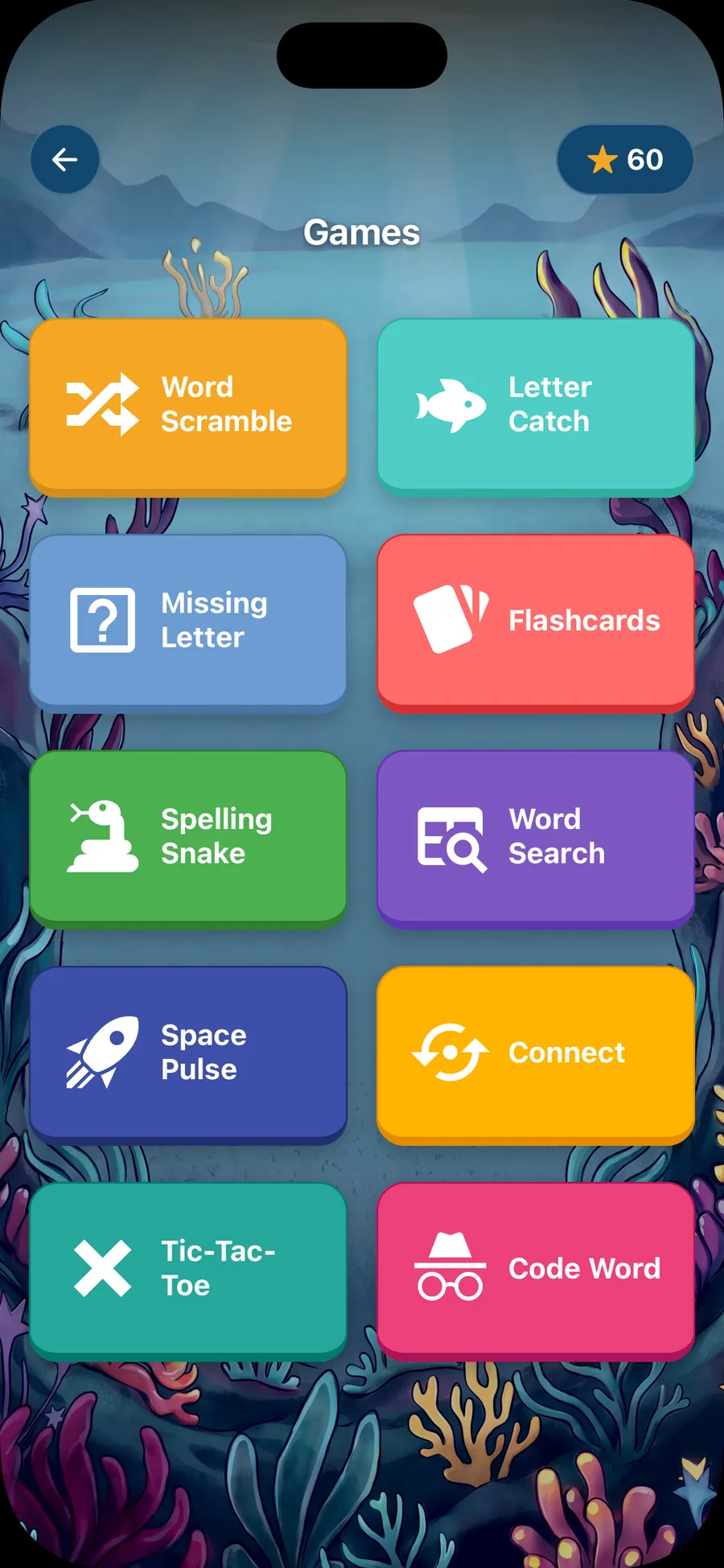
Spelling Stream for Teachers turns a list into games your class plays in any web browser, with every word read aloud in US English. It’s free, with no student logins and no ads.
- Add them to the pattern list. Put two to four heart words at the end of the week’s list, so students meet them in every game. A list holds up to 40 words.
- Spell from memory with Flashcards. In Flashcards, students hear the word, spell it out loud, then flip the card to check.
- Aim at the heart part with Missing letter. Missing letter takes letters out of each word, and when the gap falls in the heart part, students have to remember it. You can set it to hide up to 3 letters.
- Keep a running list. Make a second list of every heart word the class has learned this year, and add to it each week. Edit the words and the link stays the same.
Families can open the class list in the free Spelling Stream app and keep practicing on their own device. For more home practice, see the spelling homework ideas, and for sound-alikes such as two, how the hints work.
Sight words in the Common Core standards
The Common Core State Standards for English Language Arts name high-frequency words in kindergarten and irregularly spelled words in 1st and 2nd grade. They give a few example words but no list to teach from:
- RF.K.3c: “Read common high-frequency words by sight (e.g., the, of, to, you, she, my, is, are, do, does).”
- RF.1.3g: “Recognize and read grade-appropriate irregularly spelled words.”
- RF.2.3f: “Recognize and read grade-appropriate irregularly spelled words.”
- L.1.2d: “Use conventional spelling for words with common spelling patterns and for frequently occurring irregular words.”
For pattern lists to teach alongside these, see the kindergarten spelling words, the 1st grade spelling words and the 2nd grade spelling words. Many states publish their own English language arts standards, so check any order against your state’s standards and your school’s scope and sequence.
Sources: Common Core State Standards, Reading: Foundational Skills, Kindergarten, Grade 1 and Grade 2, and Language, Grade 1; IES What Works Clearinghouse, Foundational Skills to Support Reading for Understanding in Kindergarten Through 3rd Grade(2016); Reading Rockets, Basics: Sight Words and Orthographic Mapping and A New Model for Teaching High-Frequency Words.
Common Core State Standards quoted under the public license. © Copyright 2010. National Governors Association Center for Best Practices and Council of Chief State School Officers. All rights reserved.
Questions
What is the difference between sight words and high-frequency words?
High-frequency words are the words that appear most often in print. A sight word is any word a reader recognizes instantly, without sounding it out. Many schools use “sight words” to mean their high-frequency word list, but any word a student reads instantly is a sight word, regular or not.
What are heart words?
Heart words are high-frequency words with an irregular part. Students sound out the letters that follow the pattern and mark the odd part with a heart, to learn by heart. In says, the s at each end is regular and the ay is the heart part.
Should kindergartners memorize sight words?
Not as whole shapes. Regular words such as at, can and had are easier to learn with phonics. For irregular words, students sound out what they can and learn only the odd letters. Reading Rockets notes that memorizing word lists without phonics and phonemic awareness doesn’t build a sight word vocabulary.
How many sight words should a kindergartner learn?
The Common Core standards don’t set a number. One Reading Rockets article suggests teaching 10 to 15 very common words once children know their letter names, before phonics lessons begin, then fitting later words into phonics lessons as their patterns are taught.
Are these lists from the Dolch list?
No. The lists on this page are original, grouped by heart part. The Dolch list dates from 1936, and one analysis on Reading Rockets found that about 63% of its words can be decoded once all the regular spelling patterns are taught.