The short answer
Long a is the vowel sound in the name of the letter a, as in cake, rain and play. Its common spellings are a_e (cake), ai at the start or in the middle of a word (rain) and ay at the end (play). Teach those in 1st grade, then the less common eigh (eight), ey (they) and ea (great) in 2nd grade.
Long a is the sound in the name of the letter a, the vowel you hear in cake, rain and play. English spells it several ways, and the Common Core standards spread them across 1st and 2nd grade. This guide sets out the spellings, an order to teach them in, the clues that help students choose, the words that break the pattern, and four lists to play.
Long a spelling patterns
A sound in a spoken word is a phoneme, and the letter or letters that spell it are a grapheme. The table of vowel patterns in the IES practice guide on foundational reading skills lists a_e, ai, ay, ei, ea and ey for long a, and Reading Universe’s chart of common vowel spellings adds eigh, as in eight.
| Spelling | Where it usually goes | Words |
|---|---|---|
| a_e | Vowel, one consonant, then e | lake, grade, wave |
| ai | At the start or in the middle of a word | aim, paid, train |
| ay | At the end of a word | pay, gray, birthday |
| a | At the end of a syllable | acorn, paper, baby |
| eigh | A small group of words | eight, weigh, neighbor |
| ey | A few words, usually at the end | they, obey, convey |
| ea | Three common words | great, break, steak |
The underscore in a_e marks the spot for a consonant: lake is l, a, k, e, with the k between the a and the e. The a in acorn and paper needs no partner, because it ends a syllable. The IES guide calls this an open syllable: one that ends with a long vowel spelled by a single letter.
The order to teach long a
- a_e, with the other silent e spellings
- ai at the start or middle of a word, ay at the end
- Choosing between ai and a_e, and words that sound alike
- eigh, ey and ea, once the first three are secure
This follows the Common Core grade placement. Final e and common vowel teams such as ai and ay are 1st grade (RF.1.3c), and more vowel teams come in 2nd grade (RF.2.3b). The IES practice guide also puts long vowels with silent e before vowel teams.
1. a_e
Start from short a words students can already spell. Write can, add an e, and read cane; do the same with tap and tape. The IES guide uses this kind of word building, changing one letter at a time to make a new word. Once the idea is clear, move to words where the a_e is the only long vowel to listen for, such as the set below.
1st grade: a_e
Each word has an a, one consonant, then an e. Find the a, then draw an arch from the e back over the consonant to it.
- bake
- cave
- safe
- tape
- grade
- flake
- blame
- spade
- wake
- trade
2. ai at the start or middle, ay at the end
Here, where the sound falls in the word gives students a rule they can check. A Reading Universe lesson plan for ai and ay gives the rule: ai comes at the beginning or in the middle of a word (aim, grain), and ay comes at the end (pay, birthday). In a one-syllable word, ay is never at the start or in the middle.
The ay usually stays when an ending goes on, so play becomes played and playing. Three common verbs don’t follow that: paid, laid and said. In US English, gray is spelled with ay, so it belongs with the ay words.
The free sample on this site is a long a list too. Play the sample to try the games with words such as rain, play and cake before you make a list of your own.
1st grade: ai at the start or middle, ay at the end
Paid is the odd one out: pay becomes paid, not payed. Gray is spelled with ay in US English, so it goes in the ay group.
- aim
- paid
- grain
- bait
- claim
- gray
- pay
- sway
- stray
- birthday
3. ai or a_e?
In the middle of a word, ai and a_e spell the same sound, and the position rule can’t help. What helps instead:
- Word families. A student who can spell paint can also spell painter, painting and paintbrush.
- Sorting. An ai column and an a_e column on the board give each word a place to be remembered.
- Meaning. In sound-alike pairs such as pail and pale, the meaning picks the spelling.
When a word on a list sounds like another word, every game shows a short hint on screen under the Hear it button. For pail the hint reads “bucket”, and for pale it reads “light in color”. How the sound-alike hints work
2nd grade: ai, ay or a_e? Words that sound the same
Four pairs that sound alike. Each game shows a short hint on screen, such as “bucket” for pail, so students know which spelling you mean.
- pail
- pale
- pain
- pane
- waist
- waste
- days
- daze
4. eigh, ey and ea
Each of these belongs to a small group of words, so teach the group. eigh is in eight and its family (eighth, eighteen, eighty), in weigh and weight, and in neighbor. ey spells long a in they, obey and convey. ea spells it in only three everyday words: great, break and steak. The 2nd grade standard RF.2.3e, on words with “inconsistent but common spelling-sound correspondences”, is a good fit for this list.
2nd grade: eigh, ey and ea
The less common spellings, in three small groups: the eigh words, they and obeys, then the ea in great and breaks.
- eighth
- neighbor
- neighborhood
- paperweight
- weighing
- they
- obeys
- great
- greatly
- breaks
Common exceptions
- said and says. The ai and ay spell a short e sound here. Teach both as heart words, with the s and d sounded out and the vowel learned by heart.
- paid and laid. The past tense of pay and lay switches ay to ai, against the usual rule.
- height. The eigh spells long i in this word, not long a.
- key and monkey. ey spells long e in these words.
- Other ea words. ea also spells long e, as in eat, and short e, as in bread. Great, break and steak are the everyday words where it says long a.
A week of long a with a class link
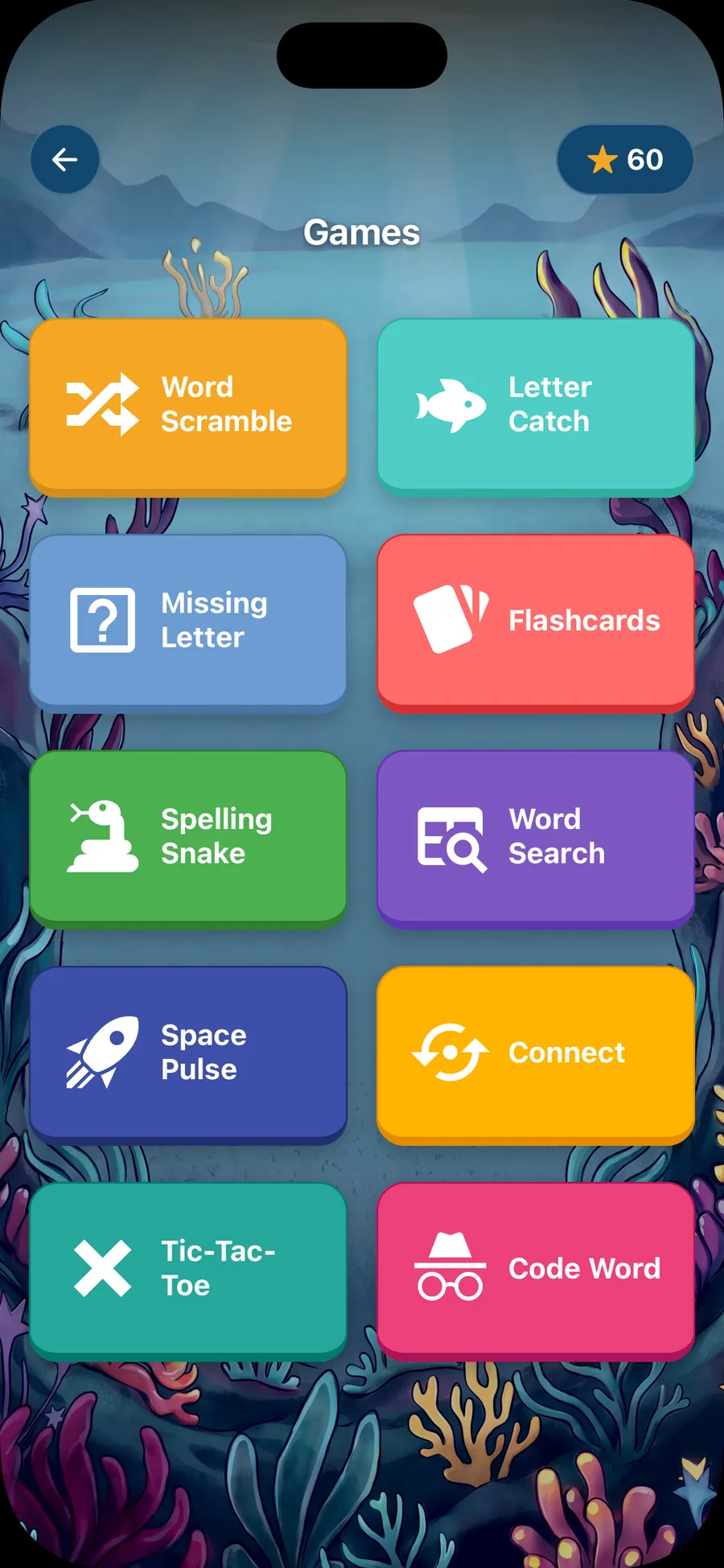
Spelling Stream for Teachers turns a list into games your class plays in any web browser, with every word read aloud in US English. It’s free, with no student logins and no ads. Take a set from this page or type your own words, then share one link.
- Monday. Play the list together and sort the words into ai, ay and a_e columns. Share the link by email, Google Classroom or a QR code.
- Tuesday and Wednesday. Students play at school or at home. In Scramble they rebuild each word, so the a and i, or a and y, have to land side by side. Missing letter takes letters out of each word, and when the gap falls in the vowel team, students have to remember which spelling the word uses. Flashcards asks them to spell each word out loud before they flip the card. Families can open the class list in the free Spelling Stream app and keep practicing on their own device.
- Thursday. Look for long a words in a read-aloud or class book and add them to the right column.
- Friday. Give the test the way you usually do. Next week, edit the list and the same link opens the new words.
Each list gets its own link and holds up to 40 words, so a reading group still on a_e can have a different list from a group on eigh and ey. The weekly spelling routine has more ideas for each day.
Long a in the Common Core standards
The Common Core State Standards for English Language Arts place long a across 1st and 2nd grade, in Reading: Foundational Skills and in Language:
- RF.1.3c: “Know final -e and common vowel team conventions for representing long vowel sounds.”
- RF.2.3b: “Know spelling-sound correspondences for additional common vowel teams.”
- RF.2.3e: “Identify words with inconsistent but common spelling-sound correspondences.”
- L.2.2d: “Generalize learned spelling patterns when writing words (e.g., cage → badge; boy → boil).”
For more lists by grade, see the 1st grade spelling words and the 2nd grade spelling words, or spelling words for every grade. Many states publish their own English language arts standards, so check any order against your state’s standards and your school’s scope and sequence.
Sources: Common Core State Standards, Reading: Foundational Skills, Grade 1, Reading: Foundational Skills, Grade 2 and Language, Grade 2; IES What Works Clearinghouse, Foundational Skills to Support Reading for Understanding in Kindergarten Through 3rd Grade(2016); Reading Universe, Lesson Plan: Vowel Teams ai and ay and Common Spellings for Vowel Phonemes.
Common Core State Standards quoted under the public license. © Copyright 2010. National Governors Association Center for Best Practices and Council of Chief State School Officers. All rights reserved.
Questions
What is the rule for ai and ay?
Use ai at the start or in the middle of a word (aim, rain) and ay at the end (play, birthday). In a one-syllable word, ay never comes at the start or in the middle. The ay usually stays when an ending goes on: play, played, playing.
How many ways can you spell long a?
Several. Children meet a_e (cake), ai (rain) and ay (play) first. Later come eigh (eight), ey (they) and ea (great), and a on its own at the end of a syllable, as in acorn and paper.
Why is it paid and not payed?
Pay, lay and say change their ay to ai in the past tense: paid, laid, said. Most other ay words keep the ay when -ed goes on, such as played, stayed and sprayed. Said also changes its vowel sound, so teach it as a heart word.
Which grade learns long a spelling patterns?
In the Common Core standards, final e and common vowel teams such as ai and ay are in 1st grade (RF.1.3c). Additional vowel teams come in 2nd grade (RF.2.3b), which is where eigh, ey and ea fit.