These 1st grade spelling lists are built on the phonics and spelling standards the Common Core State Standards set for 1st grade. They cover the digraphs sh, ch, th and wh, ng and nk at the end of a word, consonant blends, silent e, the vowel teams ee and ea, two-syllable words, the endings -s, -ed and -ing, and a few common words with tricky spellings.
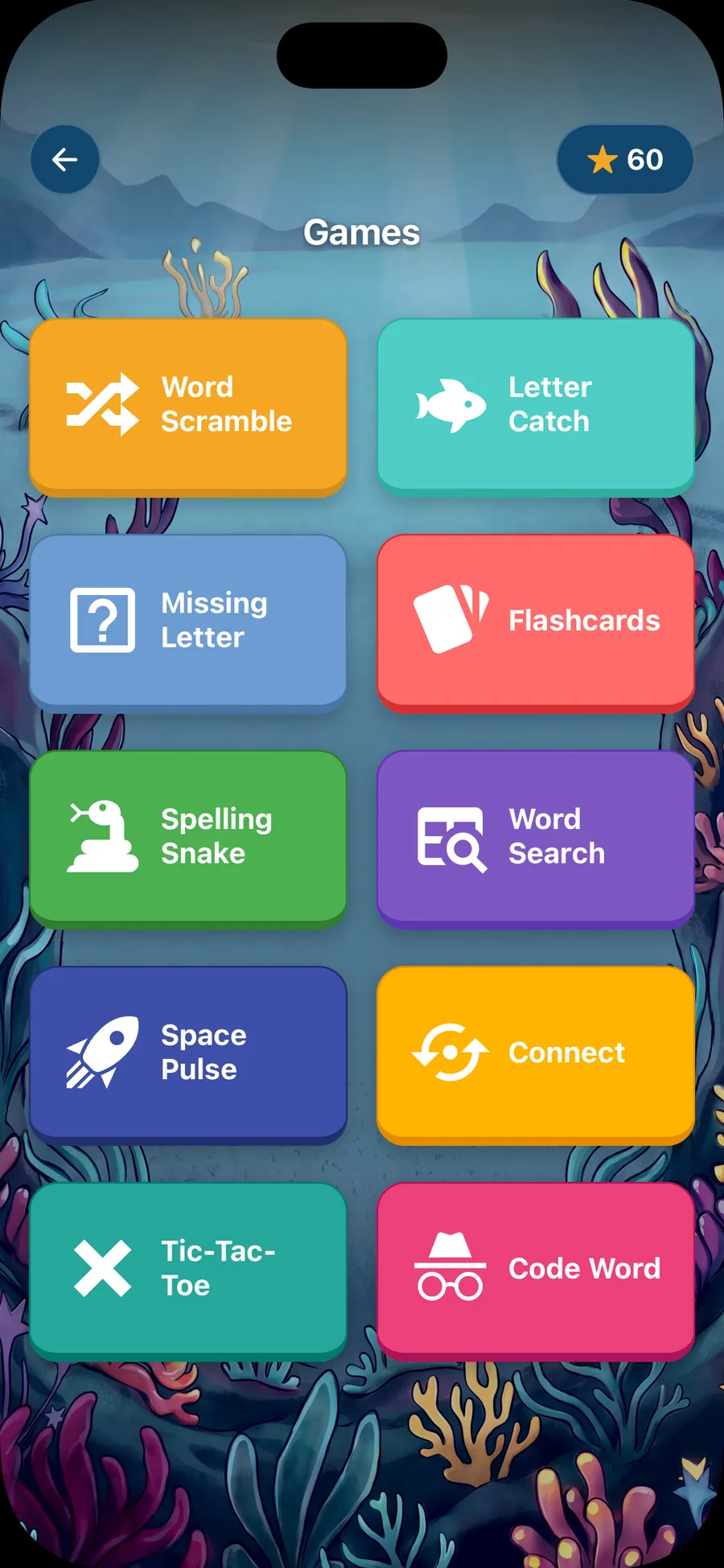
Each list has 10 words, about a week’s worth for children who are mostly 6 or 7. Press Play to hear the words in US English and try the games, or make it a class list, swap any words you like, and share one link.
Digraphs: sh, ch, th and wh
Two letters, one sound. Listen for it at the start of shell and chat, or at the end of wish and math.
- shell
- shut
- wish
- chat
- chest
- rich
- bath
- math
- thank
- when
Endings: ng and nk
Both come after a vowel at the end of a word. Say sing and then sink: nk ends with a k sound.
- sing
- sang
- song
- swing
- pink
- sink
- wink
- honk
- trunk
- skunk
Consonant blends
Two consonants side by side, each with its own sound. Say every sound: s-n-a-p has four, and so does m-a-s-k.
- flat
- glad
- snap
- trip
- skip
- step
- mask
- best
- soft
- list
Silent e: a_e, i_e, o_e and u_e
The e at the end is silent. It makes the vowel before it say its name: plate, smile, stone, mule.
- name
- plate
- snake
- wide
- smile
- line
- hope
- stone
- note
- mule
Long e: ee and ea
Two letters work as a team to spell one long e sound. No rule says which team a word uses, so sort the words into an ee group and an ea group.
- deep
- keep
- feel
- free
- green
- eat
- neat
- heat
- east
- bead
Two-syllable words
Every syllable has a vowel. Clap each word to count the beats, then spell one beat at a time: bas-ket, pump-kin.
- basket
- pumpkin
- zigzag
- bathtub
- chipmunk
- cactus
- dentist
- tennis
- mitten
- wagon
Endings: -s, -ed and -ing
The base word keeps its spelling. The -ed ending can sound like t (asked), d (played) or id (landed), and it’s always spelled e-d.
- plays
- played
- playing
- asks
- asked
- asking
- pulled
- pulling
- landed
- landing
Tricky words
Common words with a part that doesn’t match its sound, such as the ai in said. Practice them by spelling them, not by sounding them out.
- said
- were
- from
- many
- any
- once
- give
- friend
- again
- could
Spelling groups in 1st grade
If some children are still working on short vowels, give their group a kindergarten list while others move on to blends and digraphs. Make a class list for each group. Each list has its own link and QR code, and you can keep up to 25 lists.
Where these patterns come from
Each list is built on a spelling pattern in these 1st grade standards from the Common Core State Standards for English Language Arts. The words are original and aren’t copied from any published spelling program.
- RF.1.3a: “Know the spelling-sound correspondences for common consonant digraphs.” Lists: Digraphs: sh, ch, th and wh.
- L.1.2d: “Use conventional spelling for words with common spelling patterns and for frequently occurring irregular words.” Lists: Digraphs: sh, ch, th and wh; Endings: ng and nk; Silent e: a_e, i_e, o_e and u_e; Long e: ee and ea; Endings: -s, -ed and -ing; Tricky words.
- RF.1.3b: “Decode regularly spelled one-syllable words.” Lists: Endings: ng and nk; Consonant blends.
- L.1.2e: “Spell untaught words phonetically, drawing on phonemic awareness and spelling conventions.” Lists: Consonant blends.
- RF.1.3c: “Know final -e and common vowel team conventions for representing long vowel sounds.” Lists: Silent e: a_e, i_e, o_e and u_e; Long e: ee and ea.
- RF.1.3d: “Use knowledge that every syllable must have a vowel sound to determine the number of syllables in a printed word.” Lists: Two-syllable words.
- RF.1.3e: “Decode two-syllable words following basic patterns by breaking the words into syllables.” Lists: Two-syllable words.
- RF.1.3f: “Read words with inflectional endings.” Lists: Endings: -s, -ed and -ing.
- RF.1.3g: “Recognize and read grade-appropriate irregularly spelled words.” Lists: Tricky words.
Many states publish their own English language arts standards, which may differ from the Common Core. These lists follow the Common Core State Standards, so check them against your state’s standards and your school’s scope and sequence.
Source: Common Core State Standards Initiative, frequently asked questions.
Standards quoted from the Common Core State Standards for English Language Arts (National Governors Association Center for Best Practices and Council of Chief State School Officers, Washington, D.C., 2010) under the Common Core State Standards Public License. © Copyright 2010. National Governors Association Center for Best Practices and Council of Chief State School Officers. All rights reserved. The National Governors Association Center for Best Practices and the Council of Chief State School Officers are the sole owners and developers of the Common Core State Standards. They did not make these lists and do not endorse Spelling Stream for Teachers.
Questions
Why does each list follow one pattern?
Words that share a spelling, such as the sh in shell, shut and wish, show the pattern again and again in one week, so children can try it in words that aren’t on the list.
Do 1st graders need a login?
No. They open the class link in any web browser and play. There are no student accounts, class codes or passwords.
Can I change the words on a list?
Yes. Make it a class list, then add, remove or swap words before you share it. If you edit the list later, the link stays the same.
Other grades
- Kindergarten spelling words
- 2nd grade spelling words
- 3rd grade spelling words
- 4th grade spelling words
- 5th grade spelling words
Spelling words for every grade, and how the class link works