The short answer
Good spelling homework takes about 10 minutes a night and needs nothing a family has to buy. Mix a few rounds of games from the class link, saying and spelling each word out loud with a grown-up, writing each word once from memory, and a practice test at home on Thursday.
Spelling homework has to fit between dinner and bath time. A worksheet packet can be finished without ever practicing the words a child missed. The ideas below work the same way every week, so families only have to learn the routine once.
Pick two or three per night. You don't need all of them.
Five kinds of practice that work at home
Play the games from the class link
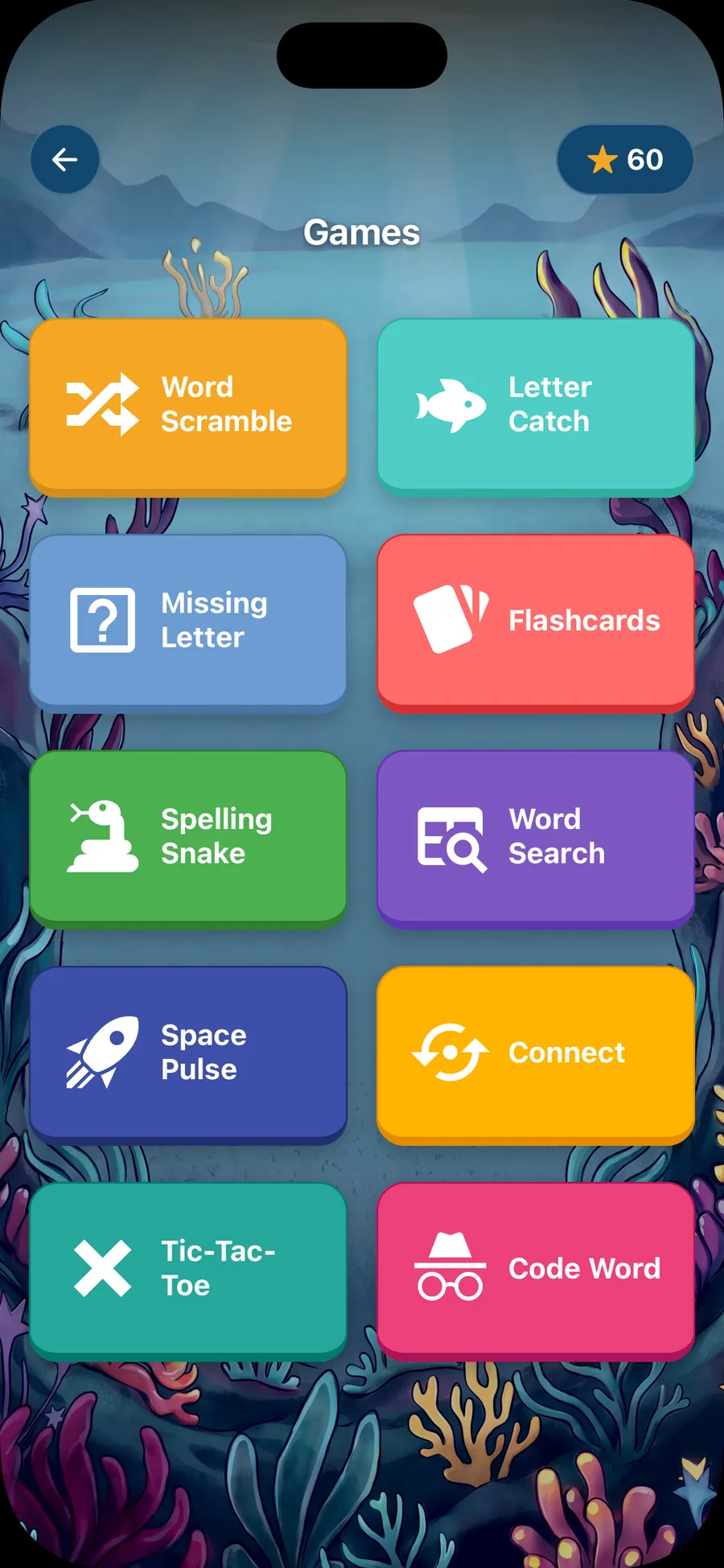
You make the week's list once and share one link. Students open it in any web browser at home. There's nothing to install and no login. Each word is read aloud, and there are three games:
- Scramble: tap the letters into the right order.
- Missing letter: one letter is gone, and the student picks it from four tiles.
- Flashcards: hear the word, spell it out loud, then flip the card to check.
Each game goes through every word on the list once, in a random order, so one round is a natural stopping point. Two rounds in different games make a good night's homework on their own.
Say it, spell it, check it
A grown-up reads a word from the list. The child says the letters out loud, one at a time, and the grown-up checks them against the list. Any word that comes out wrong gets spelled again right away, then once more at the end. It takes no materials, which makes it the one families can still do on a busy night or in the car on the way to practice.
Write each word once from memory
Look at the word, cover it, write it, then uncover it and check. One careful pass through the list is enough. Writing each word 10 times is the version kids dread, and it mostly practices copying. Writing from memory makes them pull the spelling out of their head, the same thing they'll do on Friday.
In three small classroom studies, first and second graders spelled words better after practicing them this way than after copying them in colors (rainbow writing). The difference held a day later, and five weeks later in the one study that checked. The children also liked writing from memory at least as much.
Sort the words by pattern
If the list is built around a spelling pattern, ask students to sort the words into groups. A long a list might split into ai words (rain, snail), ay words (play, gray) and a with a silent e (cake, plate). Sorting gets kids looking at why a word is spelled the way it is, and it's a good change of pace on a night when the games feel old.
A practice test on Thursday
The night before the real test, a grown-up reads each word aloud and the child writes it down. Then they check together and circle anything missed. Those circled words are the only homework left for the night.
A sample week
Short practice spread over several nights does more than one long session the night before. A 2013 review of 10 common study techniques rated spaced practice one of the two most useful, along with practice tests. Here's one way to split it over four nights:
- Monday: play two games from the class link and read the list out loud together.
- Tuesday: write each word once from memory, then one game.
- Wednesday: say it, spell it, check it, then sort the words by pattern.
- Thursday: the practice test, then one more look at any missed words.
If your class test isn't on Friday, shift everything so the practice test lands the night before. For the classroom side of the week, see the weekly spelling routine.
Explaining it to families
Give families a short note that says exactly what to do, not a page about why spelling matters. Send it once at the start of the year, then each week only the new list and link need to go home. You can adapt this:
Hi families,

Spelling homework this year takes about 10 minutes a night. Pick two or three of these:

1. Play the spelling games from our class link (any web browser, no login).
2. Read a word aloud and have your child spell it out loud. Check it against the list.
3. Have your child look at each word, cover it, write it from memory, then check.
4. On Thursday, read the words aloud as a practice test. Practice any missed words once more.

A new list and link come home every Monday. Thank you for helping!
The printed flyer from Spelling Stream for Teachers puts the week's words, the link and a QR code to practice them on one page. The guide on sending spelling words home has more ways to get the link to families.
When homework isn't working
The student rushes through the games. Ask for the say-it-spell-it routine first, then the games as the reward at the end. Flashcards asks the student to spell each word out loud before flipping the card, which slows down a child who taps fast.
The list is long. Split it. Half the words Monday and Tuesday, the other half Wednesday, and the whole list on Thursday. If some students need a shorter list all week, make a second list for them with its own link. You can keep up to 25 lists.
A family keeps missing nights. Make Thursday the one night that matters most. A practice test and one more look at the missed words still helps, even if the rest of the week didn't happen.
The student is bored by Wednesday. Switch games, or swap the writing practice for sorting.
The free Spelling Stream app for home
Some families want more than the class link, especially for tests at home. The Spelling Stream app runs on iPhone, iPad and Android, and families open the class list in it straight from the class link (or snap a photo of it, or type it in). The free version covers one list, with the first 10 words in games and tests and stars and stickers as rewards. Spelling Stream Pro covers longer lists, up to 50 words.
The class link works fine without the app, which is there for families who ask about it. The page on practicing at home has the details to pass along.
Setting up the class link
Sign in with Google or an email and password, paste the week's words, and play each one to hear how it sounds before you share. Words can be separated by spaces, commas or new lines, up to 40 per list. Add a 4-digit PIN if you'd like one. Then share the link however your families already hear from you. How it works walks through each step, or make your first list now.
If you also run spelling centers in class, the same link works there too. See spelling centers and early finisher activities.
Questions
How long should spelling homework take each night?
About 10 minutes a night. Short practice spread over the week is easier for families to keep up, and the words stick better than after one long session the night before the test.
What if a family has no computer at home?
The class link opens in any web browser, so a phone or tablet works too. Families with no device at all can still do the say-and-spell, writing from memory and the Thursday practice test, which need only paper and a pencil.
Do students need an account to play the games at home?
No. Students open the class link and pick a game. There are no student accounts or logins. If you added a 4-digit PIN to the list, they type the PIN first.
Can I see which students practiced at home?
No. The class link has no progress tracking or reports. It gives students practice with the list, and nothing about their play comes back to the teacher.
Can families use the Spelling Stream app with our class list?
Yes. On the class link, a parent chooses Play in the mobile app and the list opens in the app. They can also snap a photo of the list or type it in. The free app covers one list, with the first 10 words in games and tests and stars and stickers as rewards. Spelling Stream Pro covers longer lists, up to 50 words.