The short answer
The Dolch sight words are 220 common words that Edward William Dolch published in 1936, plus a separate list of 95 nouns. Most lists today split the 220 into five levels: pre-primer (40 words), primer (52), first grade (41), second grade (46) and third grade (41). Many of the words follow regular phonics patterns, so students can sound them out and save the memory work for the few that don’t.
The Dolch sight words are 220 common words, plus 95 common nouns, that Edward William Dolch published in 1936. Most lists today split the 220 into five levels: pre-primer, primer, first grade, second grade and third grade. Every level is on this page, in alphabetical order, in sets you can play or make into a class list.
Who Dolch was and how he made the list
Edward William Dolch (1889–1961) was a professor of education at the University of Illinois from 1924 to 1954, according to his Library of Congress name record. In February 1936 he published “A Basic Sight Vocabulary” in The Elementary School Journal. He compared three word lists of the time: the words children knew before 1st grade, gathered by the International Kindergarten Union; the first 500 words of Arthur Gates’s reading vocabulary for the primary grades; and the 453 words found most often in ten primers and ten first readers, counted by Wheeler and Howell. He kept every word, other than nouns, that all three lists shared, and added 27 words that were on two of them.
Dolch called these the “tool” words, “used in all writing, no matter what the subject”: words such as and, of, the, was and would. He left nouns out on purpose, writing that “nouns cannot be of universal use because each noun is tied to special subject matter.” The 95 nouns the three lists shared were printed separately, under a heading that called them “not recommended for a basic sight vocabulary.”
The 1936 article sorts the 220 words by part of speech, not by grade. The level names most lists use today, from pre-primer to third grade, aren’t in it, so treat the levels as an order to work through rather than a rule for each grade.
Dolch words and high-frequency words
High-frequency words are the words that come up again and again in reading, and the Dolch list is one list of them: Dolch built it from counts of the words in children’s reading. In 1976, Jerry L. Johns of Northern Illinois University checked four basal reading series published since 1970 and found that Dolch words made up more than half of the words in every book he assessed, close to what Dolch had reported for the readers of his own day.
The Common Core uses the term high-frequency words. Its kindergarten standard RF.K.3c gives ten examples: the, of, to, you, she, my, is, are, do and does. All ten are Dolch words.
Many Dolch words can be sounded out
A word on a sight word list isn’t necessarily hard to decode. The IES practice guide on foundational reading skills sorts high-frequency words into two kinds. Regular words follow the usual letter–sound patterns, and its examples are in, did, and, then, had, with, that, down and him. Irregular words “have exceptions to the typical sound–spelling patterns”, and its examples are the, there, was, want, from, said, have, friend and of. Every one of those examples except friend is a Dolch word.
Read down the pre-primer level and many words have a short vowel and spell every sound with one letter: and, big, can, help, in, it, jump, not, red, run, up. Others follow a pattern the Common Core sets for 1st grade (RF.1.3c), such as ee in see and three, ay in play, or a silent e at the end of make and ride. That leaves a smaller group with a part that doesn’t match its sounds, such as said, was, of, the, two and one. Those are the words that need extra time.
How to use the list without memorizing drills
Dolch meant the words to be drilled. His article suggests small cards flashed by the teacher, with the pack “gone over again and again until all 220 words are known with certainty.” The IES guide takes a different line for regular words: “have students apply their letter–sound skills” to work them out. In a weekly routine that looks like this:
- Teach regular words with their pattern. Put and, it and up into the week you teach short vowels, and see and three into the week you teach ee, so students learn the pattern and the word together.
- Give irregular words a short routine. The IES guide’s flashcard routine is to show the word and say it, then have students repeat it, spell it and say the whole word again. Point out the letters that don’t match the sounds, such as the ai in said, so students know which part to remember.
- Write them in sentences. Standard L.1.2d asks 1st graders to spell frequently occurring irregular words correctly, so have students write each new irregular word in a short sentence of their own.
- Bring sets back. Review earlier sets every week instead of moving on once a set has been played.
For a step-by-step routine for one irregular word, see the guide to sight words and heart words.
Playing the sets with a class link
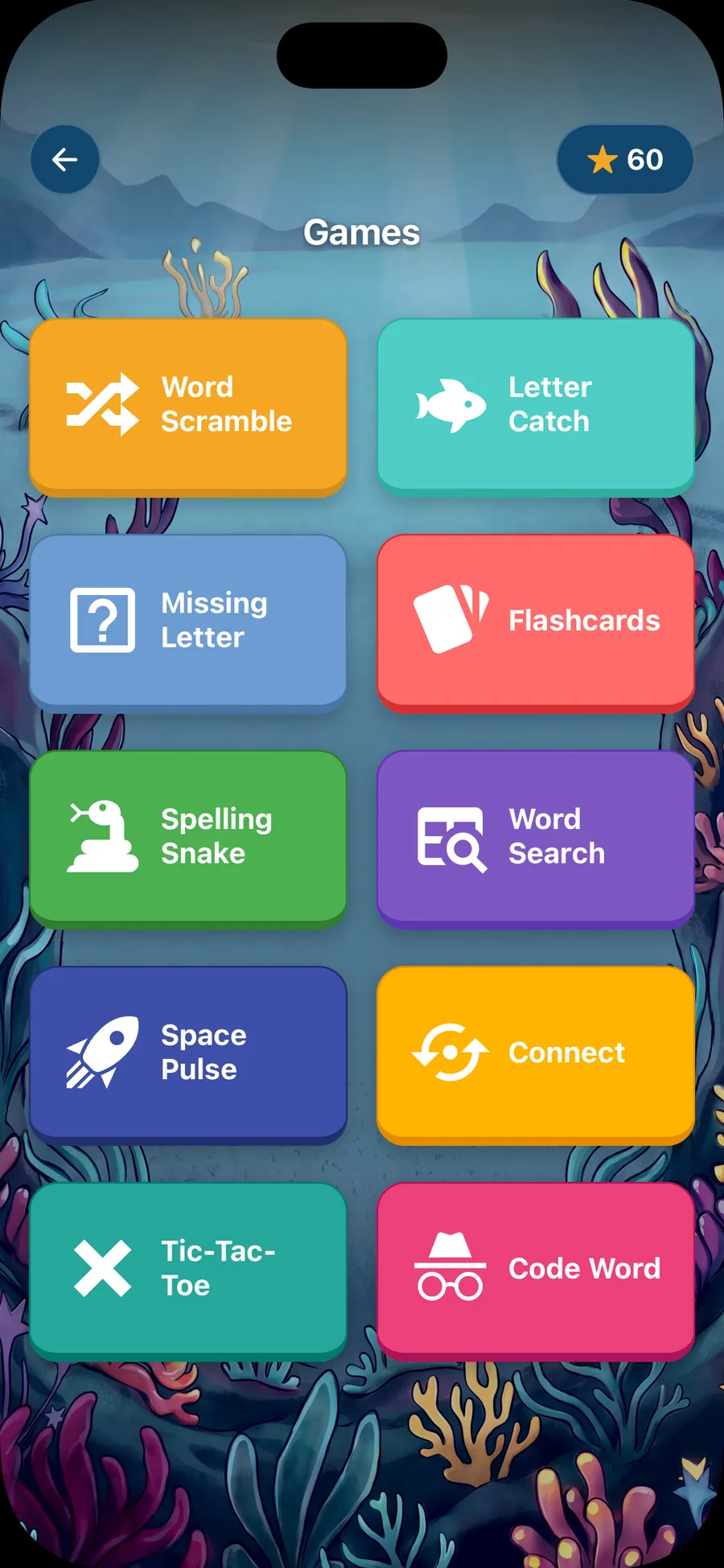
Each level below is split into sets of up to 10 words, in alphabetical order. Press Play to hear a set read aloud in US English, or Make it a class list to sign up free, change the words and share one link. Spelling Stream for Teachers is free, with no student logins and no ads, and the class link opens in any web browser. Students play Scramble, Missing letter and Flashcards, which matches the routine above: students hear the word, spell it out loud, then flip the card to check.
Many Dolch words sound like other words, such as to and two, for and four, there and their, or no and know. For each one, the games show a short hint on screen so students know which spelling is meant. How the sound-alike hints work
Two pre-primer words aren’t in the sets: a and I are single letters, so there’s nothing to spell in a game, and they’re easier to practice in a sentence. Families can open the class list in the free Spelling Stream app and keep practicing on their own device. To pair a Dolch set with a weekly pattern list, see the kindergarten and 1st grade spelling words.
Pre-primer Dolch words (40)
The sets hold 38 of the 40 words; a and I are left out, as above.
Pre-primer, set 1: and to funny
- and
- away
- big
- blue
- can
- come
- down
- find
- for
- funny
Pre-primer, set 2: go to make
- go
- help
- here
- in
- is
- it
- jump
- little
- look
- make
Pre-primer, set 3: me to see
- me
- my
- not
- one
- play
- red
- run
- said
- see
Pre-primer, set 4: the to you
- the
- three
- to
- two
- up
- we
- where
- yellow
- you
Primer Dolch words (52)
Primer, set 1: all to but
- all
- am
- are
- at
- ate
- be
- black
- brown
- but
Primer, set 2: came to he
- came
- did
- do
- eat
- four
- get
- good
- have
- he
Primer, set 3: into to out
- into
- like
- must
- new
- no
- now
- on
- our
- out
Primer, set 4: please to soon
- please
- pretty
- ran
- ride
- saw
- say
- she
- so
- soon
Primer, set 5: that to was
- that
- there
- they
- this
- too
- under
- want
- was
Primer, set 6: well to yes
- well
- went
- what
- white
- who
- will
- with
- yes
First grade Dolch words (41)
First grade, set 1: after to every
- after
- again
- an
- any
- as
- ask
- by
- could
- every
First grade, set 2: fly to him
- fly
- from
- give
- going
- had
- has
- her
- him
First grade, set 3: his to of
- his
- how
- just
- know
- let
- live
- may
- of
First grade, set 4: old to stop
- old
- once
- open
- over
- put
- round
- some
- stop
First grade, set 5: take to when
- take
- thank
- them
- then
- think
- walk
- were
- when
Second grade Dolch words (46)
Second grade, set 1: always to cold
- always
- around
- because
- been
- before
- best
- both
- buy
- call
- cold
Second grade, set 2: does to green
- does
- don't
- fast
- first
- five
- found
- gave
- goes
- green
Second grade, set 3: its to sing
- its
- made
- many
- off
- or
- pull
- read
- right
- sing
Second grade, set 4: sit to use
- sit
- sleep
- tell
- their
- these
- those
- upon
- us
- use
Second grade, set 5: very to your
- very
- wash
- which
- why
- wish
- work
- would
- write
- your
Third grade Dolch words (41)
Third grade, set 1: about to drink
- about
- better
- bring
- carry
- clean
- cut
- done
- draw
- drink
Third grade, set 2: eight to hot
- eight
- fall
- far
- full
- got
- grow
- hold
- hot
Third grade, set 3: hurt to much
- hurt
- if
- keep
- kind
- laugh
- light
- long
- much
Third grade, set 4: myself to show
- myself
- never
- only
- own
- pick
- seven
- shall
- show
Third grade, set 5: six to warm
- six
- small
- start
- ten
- today
- together
- try
- warm
The 95 Dolch nouns
These are the nouns Dolch kept off his basic list. The sets hold 93 of them in alphabetical order, leaving out two holiday words. The 1936 article prints stock where many lists today have stick.
Nouns, set 1: apple to boat
- apple
- baby
- back
- ball
- bear
- bed
- bell
- bird
- birthday
- boat
Nouns, set 2: box to children
- box
- boy
- bread
- brother
- cake
- car
- cat
- chair
- chicken
- children
Nouns, set 3: coat to eye
- coat
- corn
- cow
- day
- dog
- doll
- door
- duck
- egg
- eye
Nouns, set 4: farm to game
- farm
- farmer
- father
- feet
- fire
- fish
- floor
- flower
- game
Nouns, set 5: garden to home
- garden
- girl
- goodbye
- grass
- ground
- hand
- head
- hill
- home
Nouns, set 6: horse to money
- horse
- house
- kitty
- leg
- letter
- man
- men
- milk
- money
Nouns, set 7: morning to pig
- morning
- mother
- name
- nest
- night
- paper
- party
- picture
- pig
Nouns, set 8: rabbit to sister
- rabbit
- rain
- ring
- robin
- school
- seed
- sheep
- shoe
- sister
Nouns, set 9: snow to time
- snow
- song
- squirrel
- stock
- street
- sun
- table
- thing
- time
Nouns, set 10: top to wood
- top
- toy
- tree
- watch
- water
- way
- wind
- window
- wood
Where Dolch words sit in the Common Core
The Common Core State Standards for English Language Arts don’t name the Dolch list. They cover high-frequency and irregularly spelled words in these standards:
- RF.K.3c: “Read common high-frequency words by sight (e.g., the, of, to, you, she, my, is, are, do, does).”
- RF.1.3g and RF.2.3f: “Recognize and read grade-appropriate irregularly spelled words.”
- RF.3.3d: “Read grade-appropriate irregularly spelled words.”
- L.1.2d: “Use conventional spelling for words with common spelling patterns and for frequently occurring irregular words.”
Many states publish their own English language arts standards, so check the grade for each level against your state’s standards and your school’s scope and sequence. For the wider week, see the weekly spelling routine and spelling words by grade.
Sources: E. W. Dolch, “A Basic Sight Vocabulary”, The Elementary School Journal, 1936, Library of Congress name record for Edward William Dolch, Jerry L. Johns, Basic Readers and Basic Words (ERIC, 1976), IES practice guide, Foundational Skills to Support Reading for Understanding, Common Core State Standards for English Language Arts.
Common Core State Standards quoted on this page: © Copyright 2010. National Governors Association Center for Best Practices and Council of Chief State School Officers. All rights reserved.
Questions
How many Dolch sight words are there?
220, plus 95 nouns, for 315 in all. The 220 are usually split into pre-primer (40), primer (52), first grade (41), second grade (46) and third grade (41). Dolch printed the nouns as a separate list.
What is the difference between Dolch words and high-frequency words?
High-frequency words are the words that turn up most often in reading. The Dolch list is one list of them, built in 1936 from three word counts of children’s reading. All ten examples in the Common Core kindergarten standard RF.K.3c, such as the, of, to and does, are Dolch words.
Do students have to memorize every Dolch word?
No. Many Dolch words follow regular letter–sound patterns, such as and, big, run and see, and students can sound them out once they know the pattern. Save the extra practice for the words with an unusual part, such as said, was, of and two.
What grade are the Dolch levels for?
The level names suggest kindergarten to 3rd grade, but the 1936 article has no grade levels: it sorts the words by part of speech. Dolch wrote it for teachers who found pupils from 2nd grade on with very few sight words, so use the levels as an order to work through, not a deadline.
Are the Dolch nouns sight words?
Dolch didn’t think so. He printed the 95 nouns under a heading that called them “not recommended for a basic sight vocabulary”, because each noun belongs to its own subject. They were common to all three of the word lists he compared, so the noun sets on this page work as extra practice.