The short answer
Most nouns add s (pencil, pencils). Nouns ending in s, x, z, ch or sh add es, and you can hear the extra syllable (beach, beaches). A consonant and y becomes ies (bunny, bunnies), but a vowel and y just adds s (toy, toys). Many f and fe words change to ves (leaf, leaves), and irregular plurals change inside the word or not at all (mouse, mice; moose, moose).
English has a handful of ways to make a noun plural, and the last letters of the singular tell students which one to use. Below, each rule has a check students can say out loud and a list of words to play, and the end of the guide shows which grade the Common Core puts each one in.
Plural rules in one table
| The singular ends in | To make it plural | Examples |
|---|---|---|
| Most letters | Add s | pencil, pencils; rock, rocks |
| s, x, z, ch or sh | Add es | inch, inches; splash, splashes |
| A consonant and y | Change y to i, add es | bunny, bunnies; sky, skies |
| A vowel and y | Add s | turkey, turkeys; tray, trays |
| f or fe | Often f to v, add es; some add s | leaf, leaves; cliff, cliffs |
| o | Some add es; many add s | potato, potatoes; radio, radios |
| No pattern | Learn the word | mouse, mice; moose, moose |
Add s, or es after s, x, z, ch and sh
The rule. Most nouns add s: crayon, crayons. Nouns that end in s, x, z, ch or sh add es: walrus, walruses; mailbox, mailboxes; branch, branches; splash, splashes.
The check. Say the plural out loud. Some plurals can only be said with a full extra syllable, and those are the ones that take es: inch-es, watch-es. If the singular already ends in e, add only s: edge, edges; house, houses. Standard L.K.1c has kindergartners form these plurals out loud, so the spoken check builds on something students already do.
Kindergarten to 2nd grade: s or es
Say each plural out loud. If you hear an extra syllable at the end, as in beach-es, the word takes es.
- pencils
- rocks
- crayons
- walruses
- mailboxes
- beaches
- inches
- branches
- watches
- splashes
For more lists at this level, see the 2nd grade spelling words.
Words that end in y
The rule. When a consonant comes before the y, change the y to i and add es: bunny, bunnies; daisy, daisies; library, libraries; sky, skies. When a vowel comes before the y, just add s: toy, toys; valley, valleys; tray, trays.
The check. Cover the y with a finger and look at the letter before it. A vowel (a, e, o or u) means s. A consonant means ies. Turkeys and pennies make a good pair for the board, because they show both halves of the rule in one look.
Linking it to verbs. The same check works when a verb adds s: cry, cries; play, plays. Standard L.3.2e uses cries as one of its examples of adding a suffix, so students who learn the rule for plurals already have it for verbs.
2nd and 3rd grade: ies, or just s
Look at the letter before the y. A consonant means ies (bunny, bunnies). A vowel means just s (toy, toys).
- bunnies
- pennies
- daisies
- butterflies
- libraries
- skies
- toys
- turkeys
- valleys
- trays
Words that end in f, fe or o
f and fe. Many of these change the f or fe to v and add es: leaf, leaves; life, lives; shelf, shelves; half, halves. Others just add s. Dictionary.com’s note on roof gives roofs, proofs and chiefs as examples, and cliff and belief work the same way: cliffs, beliefs. A few words take either spelling, and the American Heritage Dictionary lists both scarves and scarfs, and hooves and hoofs.
The check. Say the plural. If you hear a v (leaves), write ves. If you hear an f (cliffs, chiefs), write s. When students aren’t sure how the plural sounds, the dictionary settles it.
o. A vowel before the o means just add s: radio, radios; video, videos; zoo, zoos. After a consonant, the GPO Style Manual, the US government’s printing guide, adds es (potato, potatoes; tomato, tomatoes) but lists dozens of exceptions that add only s, including music words such as pianos, solos, piccolos and banjos. Photo, short for photograph, adds s too: photos. Some words take either spelling, such as volcanoes or volcanos. No sound check helps here, since es and s sound the same after o, so teach the common es words as a short list to know by heart.
4th and 5th grade: words ending in f, fe and o
Sort them into plurals that change the f to v (leaves, lives), plurals that add s, and o words that add es.
- leaves
- lives
- cliffs
- chiefs
- beliefs
- potatoes
- tomatoes
- radios
- photos
- videos
Irregular plurals, and nouns that stay the same
Plurals that change inside the word. Some plurals change their vowel: foot, feet; mouse, mice; goose, geese; tooth, teeth; woman, women. A few add en or ren: child, children. A compound word takes the plural of its last part, so snowman becomes snowmen. Standard L.2.1b names feet, children, teeth, mice and fish as the irregular plural nouns 2nd graders should form and use.
Nouns that stay the same. Some nouns are spelled the same for one or many: one sheep, two sheep; one deer, two deer; one moose, two moose; one bison, two bison. Series, species and spacecraft work the same way. Fish can stay the same too, and fishes is also correct.
The check. There’s no letter check for irregular plurals. Many are words children already say, such as feet and children, so the job is spelling a word they know. Saying “one …, two …” before writing helps students hear whether the word changes at all.
2nd to 5th grade: irregular plurals and plurals that stay the same
Say “one …, two …” with each word: one mouse, two mice; one moose, two moose.
- children
- feet
- mice
- snowmen
- moose
- bison
- series
- species
- spacecraft
When to teach each rule
The Common Core spreads plurals across the early grades. This order follows its standards:
- Kindergarten: s and es out loud. Standard L.K.1c has children form regular plurals orally, with dog, dogs and wish, wishes as examples.
- 1st grade: s and es in writing, with plural nouns matched to their verbs in a sentence (L.1.1c).
- 2nd grade: irregular plurals such as feet, children and mice (L.2.1b), and checking spellings in a beginning dictionary (L.2.2e), which is the habit the f and o words need.
- 3rd grade: regular and irregular plural nouns together (L.3.1b), with y to ies.
- 4th and 5th grade: f, fe and o words, and mixed review with words from every rule.
Practicing plurals with a class link
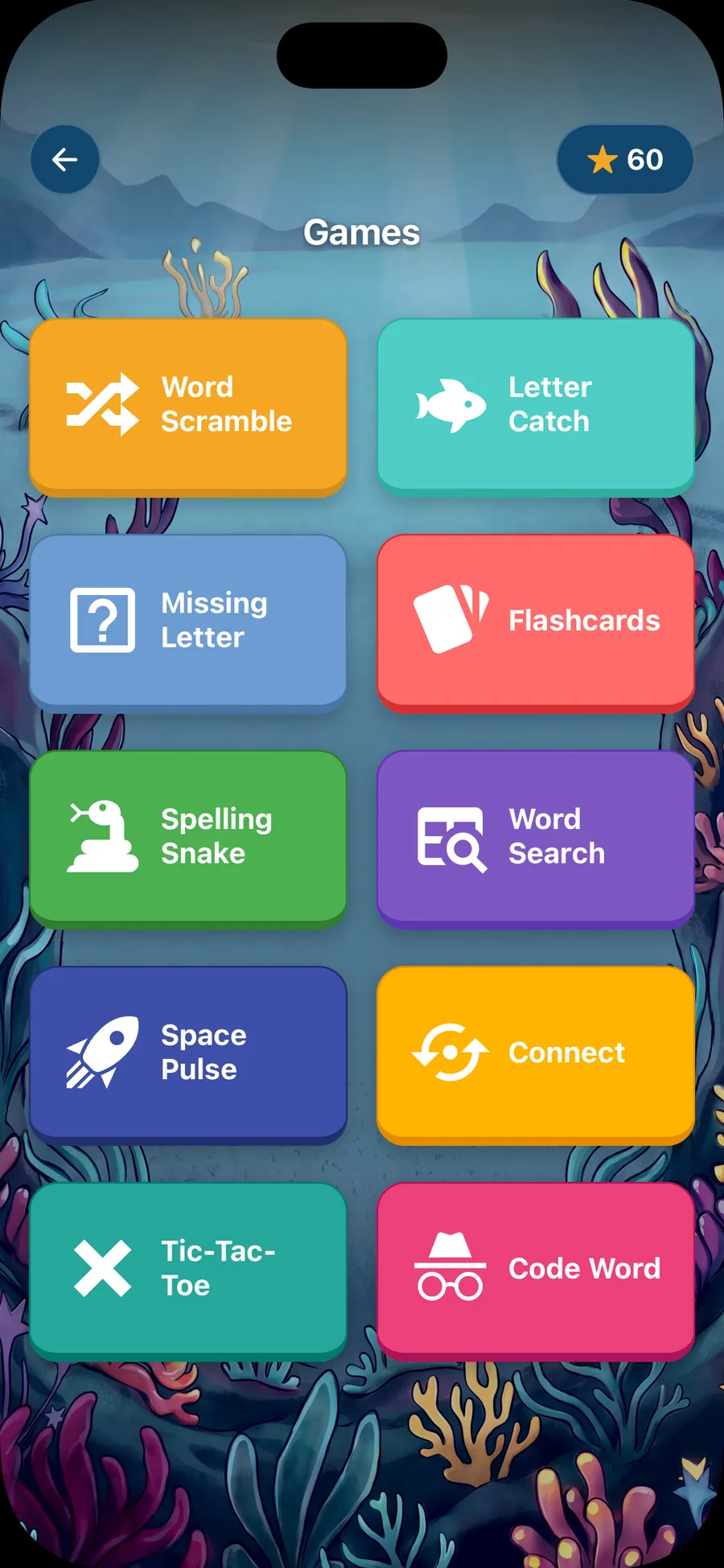
Spelling Stream for Teachers turns a word list into games your class plays in any web browser, with each word read aloud in US English. It’s free, with no student logins and no ads. Press Make it a class list under any set above, sign up free, or type your own words, and share one link.
- In Flashcards, students hear the plural and spell it out loud before they flip the card. Ask them to say the singular first: “branch, branches, b-r-a-n-c-h-e-s.”
- Scramble can add extra letters that don’t belong, so students have to decide whether the word needs an e before its s.
- Missing letter can hide up to three letters in a word. When a gap falls in the ending, students need the rule to fill it.
After the rules are taught, a mixed list with two or three words from each set makes students choose the rule every time. You can keep up to 25 lists, each with its own link and QR code, so each spelling group can have its own. Families can open the class list in the free Spelling Stream app and keep practicing on their own device. For homework that goes with it, see spelling homework ideas, and for every grade’s lists, start at spelling words by grade.
Where plurals sit in the Common Core
The Common Core State Standards for English Language Arts cover plurals in the Language standards:
- L.K.1c: “Form regular plural nouns orally by adding /s/ or /es/ (e.g., dog, dogs; wish, wishes).”
- L.1.1c: “Use singular and plural nouns with matching verbs in basic sentences (e.g., He hops; We hop).”
- L.2.1b: “Form and use frequently occurring irregular plural nouns (e.g., feet, children, teeth, mice, fish).”
- L.2.2e: “Consult reference materials, including beginning dictionaries, as needed to check and correct spellings.”
- L.3.1b: “Form and use regular and irregular plural nouns.”
Many states publish their own English language arts standards, so check this order against your state’s standards and your school’s scope and sequence.
Sources: Common Core State Standards for English Language Arts, SIUC Writing Center, possessives and plurals of nouns, GPO Style Manual (2016), chapter 5, American Heritage Dictionary, Dictionary.com, roof.
Common Core State Standards quoted on this page: © Copyright 2010. National Governors Association Center for Best Practices and Council of Chief State School Officers. All rights reserved.
Questions
When do you add es instead of s?
When the noun ends in s, x, z, ch or sh. Say the plural out loud: if it has an extra syllable at the end (box-es, beach-es), write es. A noun that already ends in e adds only s, even with the extra syllable: house, houses.
Which irregular plural nouns do 2nd graders learn?
The Common Core standard for 2nd grade, L.2.1b, gives feet, children, teeth, mice and fish as examples. Women and geese are two more that come up often. The irregular set on this page starts with three of the standard’s examples.
Why is it roofs and not rooves?
Changing f to ves is a pattern, not a rule every word follows. Roof, chief, cliff and belief just add s. A few words take either spelling: scarves or scarfs, hooves or hoofs. When students aren’t sure, a dictionary entry shows the plural.
Is it potatoes or potatos?
Potatoes, and tomatoes too. Many other o words just add s, such as radios, photos, videos and pianos, and a few take either spelling, such as volcanoes or volcanos. Teach the es words as a short list to know by heart.
Which nouns are the same in the singular and plural?
Sheep, deer, moose, bison, series, species and spacecraft. Fish can stay the same as well, and fishes is also correct. Say “one moose, two moose” to hear that nothing changes.