The short answer
Long a is the sound in the letter’s name, as in rain, play and cake. Its three common spellings are a-e (cake), ai in the middle of a word (rain) and ay at the end (play). Teach a-e in Year 1 and ai and ay in Year 2, then the rarer eigh (eight), ey (grey, they) and ea (great).
Long a is the sound you hear in the name of the letter a, as in rain, play and cake. English spells it at least six ways. Three of them, a-e, ai and ay, cover most everyday words; the other three, eigh, ey and ea, turn up in a few common words that are worth learning as a group. This guide gives an order for all six, the clues that help children choose, the exceptions, and four lists to play.
The six spellings of long a
The Australian Curriculum glossary defines a long vowel as “A vowel that is pronounced the same as the name of the letter (e.g. be, go).” Each spelling below is a grapheme: the letter or letters that spell one sound, or phoneme. Two of them, ai and ay, are vowel digraphs, which the glossary defines as “Two successive vowels that represent a single phoneme (e.g. /ai/ in the word ‘rain’; /ea/ in the word ‘beach’; /ee/ in the word ‘free’).” The a-e in cake is a split digraph: the a and the e spell the sound together, with the k between them.
| Spelling | Where it goes | Words |
|---|---|---|
| a-e | Split by one consonant, in the middle of a word | cake, plate, name |
| ai | In the middle of a word | rain, snail, paint |
| ay | At the end of a word | play, day, today |
| eigh | A small group of words, many about numbers or weight | eight, weigh, neighbour |
| ey | A few words, at the end | grey, they, obey |
| ea | Three common words | great, break, steak |
The order to teach them
- a-e, in Year 1, with the other split digraphs
- ai in the middle and ay at the end, in Year 2
- Choosing between ai and a-e, with words that sound the same
- eigh, ey and ea, once the common three are secure
1. a-e
a-e comes first here because it arrives with i-e, o-e and u-e, and children can build it from words they already spell: add an e to cap and you get cape. Start with the high-use words in the set below, such as came and name, so the pattern pays off in children’s writing straight away.
Year 1: a-e
Each word has a-e with one consonant in the split. Came, name, take, gave and same are words children write often.
- came
- name
- take
- gave
- same
- plate
- skate
- frame
- chase
- crate
2. ai in the middle, ay at the end
Position is a useful clue for long a. Inside a word it’s usually ai (rain, paint, afraid). At the end it’s ay (play, today, holiday), because English words seldom end in i. The ay stays when an ending goes on, so play becomes played and playing, not plaied.
The free sample is a long a list too. Press Play the sample in Australian English to try the games with words such as rain, play and cake before you make a list of your own.
Year 2: ai in the middle, ay at the end
ai sits inside the word and ay at the end. Played keeps its ay when -ed is added.
- nail
- play
- drain
- say
- afraid
- today
- trail
- holiday
- stain
- played
3. ai or a-e?
This is the hard part. In the middle of a word, ai and a-e sound the same, and no rule says which one a word uses. Three things help:
- Word families. Once a child knows rain, they can spell rainy, raincoat and rainbow, which all keep the ai.
- Sorting by spelling. A list sorted into an ai column and an a-e column helps children remember how each word looks.
- Meaning. In sound-alike pairs such as tail and tale, the meaning decides the spelling.
When a list has a word that sounds like another word, every game shows a short hint on screen under the Hear it button, so students know which spelling you mean. The hints follow the voice, so a list read in Australian English gets hints for words that sound alike in Australian English. How the sound-alike hints work
Years 2 and 3: ai or a-e? Words that sound the same
Five pairs that sound the same. Each game shows a short hint on screen, such as “story” for tale, so students know which spelling is meant.
- tail
- tale
- plain
- plane
- made
- maid
- main
- mane
- raise
- rays
4. eigh, ey and ea
These three spellings belong to small groups of words, so teach them as groups. eigh is in eight and its family (eighteen, eighty), in weigh and weight, and in neighbour. ey spells long a in they, grey and obey. ea spells it in only three common words: great, break and steak.
Grey is the Australian spelling. US English spells it gray, so check any list you copy from a US website before you share it.
Year 2 and up: eigh, ey and ea
The rarer spellings. Learn them in small groups: the eigh words, they and grey, then great and break.
- eighteen
- they
- breaking
- weighed
- grey
- greater
- neigh
- obeyed
- steaks
- freight
Common exceptions
- said and says. The ai and ay spell a short e sound. Teach them as tricky words.
- ai in a weak beat. In captain and mountain, the ai is in the unstressed beat and you barely hear it.
- eigh in height. Here eigh says long i, not long a.
- ey as long e. In key, monkey and honey, ey spells the long e sound.
- ea as long e or short e. Most ea words say long e (team) or short e (bread). Great, break and steak are the outliers.
- a on its own. At the end of a syllable, a can say its name with no other letters: ba-by, pa-per, ta-ble.
A week of long a with a class link
Spelling Stream for Teachers turns a list into games your class plays in any web browser, with every word read aloud in Australian English. It’s free, with no student logins and no ads.
- Monday. Play the list together and sort the words by spelling. Share the link by email, Google Classroom or a QR code.
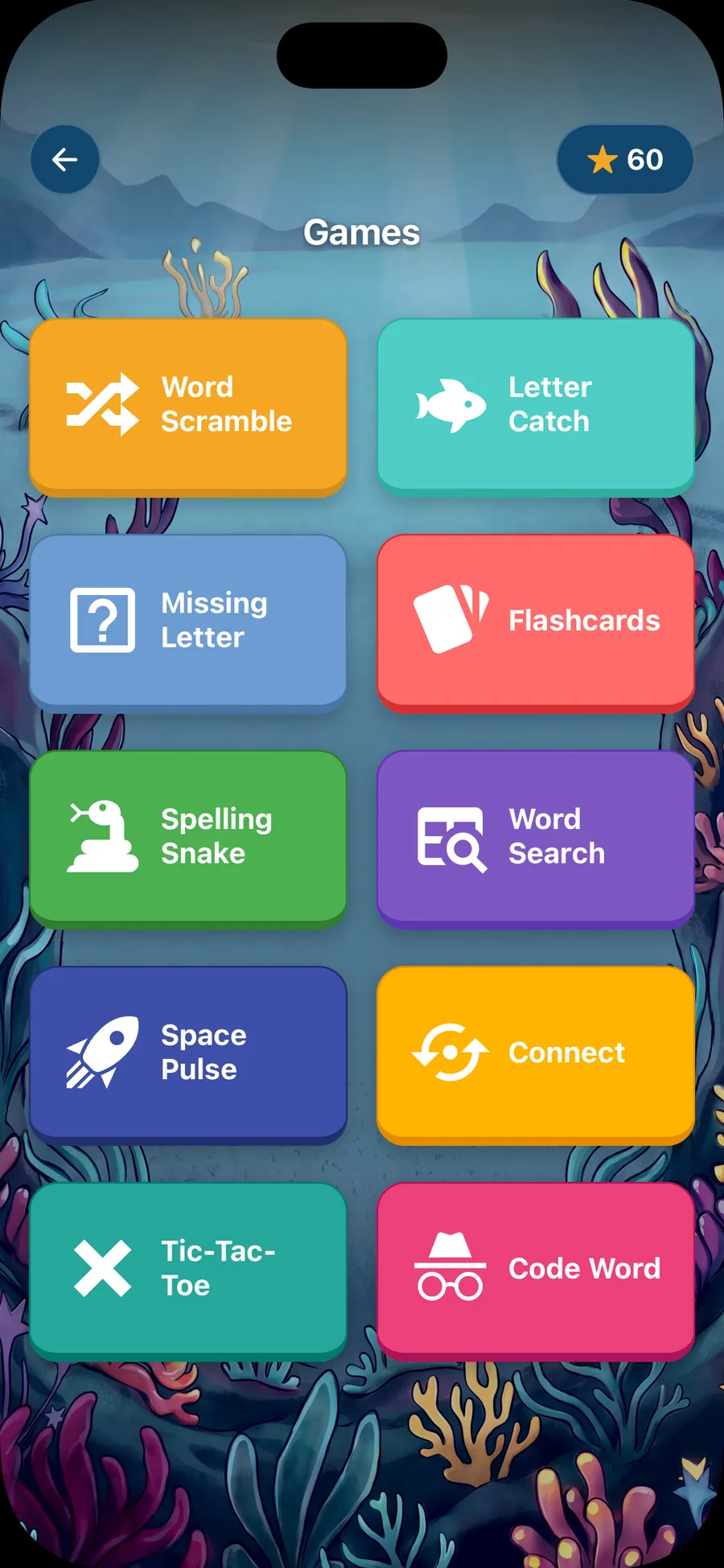
- During the week. Students play at school and at home. Scramble has them rebuild each word, so they see where the ai or ay sits. In Missing letter, a missing a, i or y makes them think about which spelling the word uses. Flashcards asks them to spell each word out loud before they flip the card.
- Thursday. Hunt for long a words in the class reader and add them to the right column.
- Friday. Test the words the way you usually do. Next Monday, edit the list and the same link opens the new words.
A list holds up to 40 words, and each list gets its own link, so a group still working on a-e can have a different list from a group on eigh and ey. How the class link works in Australian classrooms
Where long a sits in the Australian Curriculum
The Australian Curriculum v9.0 English brings in common long vowels in Year 1, and vowel digraphs and less common long vowel patterns in Year 2. Homophones come in Year 3.
- AC9E1LY11: “use short vowels, common long vowels, consonant blends and digraphs to write words, and blend these to read one- and two-syllable words”.
- AC9E2LY10: “use phoneme–grapheme (sound–letter/s) matches, including vowel digraphs, less common long vowel patterns, consonant clusters and silent letters when reading and writing words of one or more syllables, including compound words”.
- AC9E3LY12: “recognise and know how to write most high-frequency words including some homophones”.
For more lists, see the Year 1 spelling words (long vowels with a final e), the Year 2 spelling words (a list for ai and ay, and others for ee, oa and igh) and the Year 3 spelling words (common homophones). New South Wales and Victoria publish their own English syllabus and curriculum, so check any order against your school’s scope and sequence.
Sources: Australian Curriculum v9.0 English glossary, Australian Curriculum v9.0 English, F–6 content.
© Australian Curriculum, Assessment and Reporting Authority (ACARA) 2010 to present, unless otherwise indicated. This material was downloaded from the Australian Curriculum website (Website) (accessed 14 November 2026) and was not modified. The material is licensed under CC BY 4.0. Version updates are tracked in the ‘Curriculum version history’ section on the ‘About the Australian Curriculum’ page of the Australian Curriculum website. ACARA does not endorse any product that uses the Australian Curriculum or make any representations as to the quality of such products. Any product that uses material published on this website should not be taken to be affiliated with ACARA or have the sponsorship or approval of ACARA. It is up to each person to make their own assessment of the product, taking into account matters including, but not limited to, the version number and the degree to which the materials align with the content descriptions and achievement standards (where relevant). Where there is a claim of alignment, it is important to check that the materials align with the content descriptions and achievement standards (endorsed by all education Ministers), not the elaborations (examples provided by ACARA).
Questions
When do you use ai and when do you use ay?
Use ai in the middle of a word (rain, paint) and ay at the end (play, today). The ay stays when you add an ending, so play becomes plays, played and playing.
Is it grey or gray in Australia?
Grey. Australian English spells it grey, and US English spells it gray. If you copy a long a list from a US website, change gray to grey before you share it.
How do children know whether to write ai or a-e?
In the middle of a word, the sound alone can’t tell them. Teach words in families (rain, rainy, rainbow) and sort lists by spelling, so children see each word’s pattern. For sound-alike pairs such as tail and tale, the meaning decides.
Which long a words are tricky?
Said and says, where ai and ay spell a short e sound. Teach them as tricky words, apart from the long a pattern.