These Year 3 spelling lists are built on the spelling patterns in the Australian Curriculum v9.0 English for Year 3: the three sounds of ch, -dge and -tch, three-letter blends such as str, the prefixes un-, re- and mis-, plurals with -es, and common homophones.
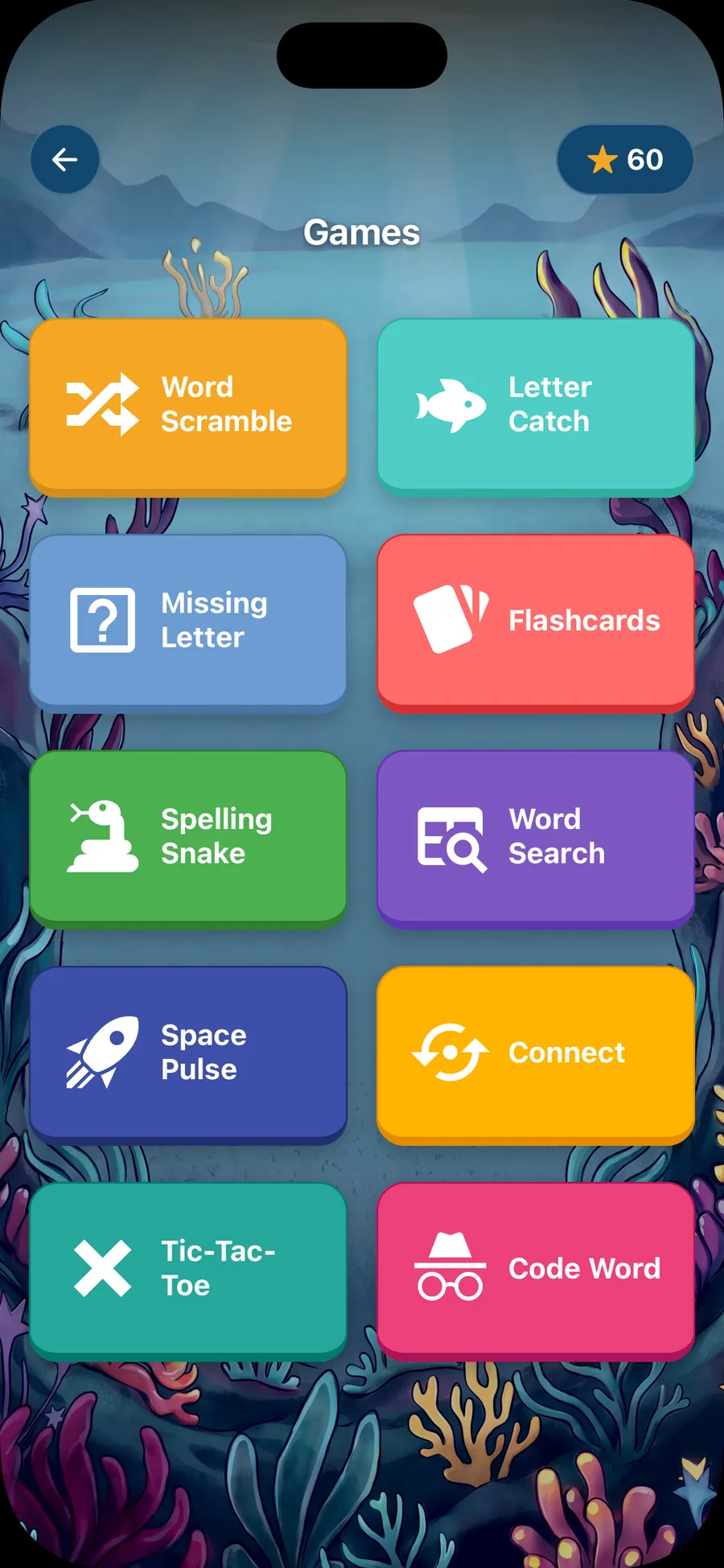
Each list has 10 words, a week’s list for most children of 8 or 9. Play a list to hear the words in Australian English and try the games. When you’re ready to use one, make it a class list, add or swap words, and share the link.
ch three ways
Most often ch says the sound in chair, but it can sound like sh in chef or k in school.
- chair
- cheese
- lunch
- chicken
- chef
- parachute
- school
- chemist
- echo
- anchor
-dge and -tch
Straight after a short vowel, the j sound is usually spelt dge and the ch sound tch: bridge, kitchen.
- bridge
- ridge
- hedge
- smudge
- wedge
- kitchen
- catch
- stitch
- sketch
- patch
Three-letter blends: str, scr and spl
Three consonant sounds in a row. Say each one before you write it: s-t-r-ing.
- string
- street
- strong
- straw
- screen
- scribble
- scroll
- splash
- split
- splendid
Prefixes: un-, re- and mis-
A prefix changes the meaning of the base word and leaves its spelling alone. Add mis- to spell and you get misspell, with both s’s.
- unlock
- unfold
- untie
- rewrite
- refill
- retell
- reheat
- misread
- misspell
- mistake
Plurals with -es
Words that end in s, ss, sh, ch, x or z add -es, which you can hear as an extra beat: box, box-es.
- dishes
- wishes
- brushes
- boxes
- foxes
- dresses
- classes
- benches
- peaches
- buzzes
Common homophones
Each pair sounds the same and is spelt differently. A short hint on screen says which word is meant.
- see
- sea
- hear
- here
- road
- rode
- one
- won
- sail
- sale
NAPLAN in Year 3
Year 3 students sit NAPLAN in March. In 2027 the tests run from 10 to 22 March. The conventions of language test has a spelling section, and some of its spelling questions play a word aloud for students to type.
These lists aren’t NAPLAN practice, and ACARA says students aren’t expected to study for NAPLAN. They follow the patterns Year 3 covers across the year.
Sources: NAPLAN key dates, what’s in the NAPLAN tests, NAPLAN Online, NAPLAN FAQs.
Where these patterns come from
Each list is built on a spelling pattern in these Australian Curriculum v9.0 English content descriptions for Year 3. The words are original and aren’t copied from any published spelling program.
- AC9E3LY09: “understand how to apply knowledge of phoneme–grapheme (sound–letter) relationships, syllables, and blending and segmenting to fluently read and write multisyllabic words with more complex letter patterns”. Lists: ch three ways.
- AC9E3LY11: “use phoneme–grapheme (sound–letter) relationships and less common letter patterns to spell words”. Lists: -dge and -tch; Three-letter blends: str, scr and spl.
- AC9E3LY10: “understand how to apply knowledge of common base words, prefixes, suffixes and generalisations for adding a suffix to a base word to read and comprehend new multimorphemic words”. Lists: Prefixes: un-, re- and mis-; Plurals with -es.
- AC9E3LY12: “recognise and know how to write most high-frequency words including some homophones”. Lists: Common homophones.
New South Wales and Victoria publish their own English syllabus and curriculum. These lists follow the Australian Curriculum, so check them against your school’s scope and sequence.
© Australian Curriculum, Assessment and Reporting Authority (ACARA) 2010 to present, unless otherwise indicated. This material was downloaded from the Australian Curriculum website (Website) (accessed 14 November 2026) and was not modified. The material is licensed under CC BY 4.0. Version updates are tracked in the ‘Curriculum version history’ section on the ‘About the Australian Curriculum’ page of the Australian Curriculum website. ACARA does not endorse any product that uses the Australian Curriculum or make any representations as to the quality of such products. Any product that uses material published on this website should not be taken to be affiliated with ACARA or have the sponsorship or approval of ACARA. It is up to each person to make their own assessment of the product, taking into account matters including, but not limited to, the version number and the degree to which the materials align with the content descriptions and achievement standards (where relevant). Where there is a claim of alignment, it is important to check that the materials align with the content descriptions and achievement standards (endorsed by all education Ministers), not the elaborations (examples provided by ACARA).
Questions
Are these lists NAPLAN practice?
No. They follow the Year 3 spelling patterns in the Australian Curriculum, and ACARA says students aren’t expected to study for NAPLAN. Hearing a word and then spelling it is part of every game here, and some NAPLAN spelling questions also play the word aloud.
How do the lists relate to the Australian Curriculum?
Each list is built on a spelling pattern in the Australian Curriculum v9.0 English content descriptions for Year 3, quoted with their codes further up this page. ACARA does not endorse Spelling Stream for Teachers or any other product.
Can different spelling groups get different lists?
Yes. Make a class list for each group. Each list gets its own link and QR code, and you can keep up to 25 lists.
Other years
- Year 2 spelling words
- Year 4 spelling words
- Year 1 spelling words
- Year 5 spelling words
- Foundation spelling words
- Year 6 spelling words
All spelling lists for Australia, and how the class link works