The short answer
Many words just add -ed or -ing: jump, jumped, jumping. Three rules cover the rest: drop a silent e (hope, hoping), double one consonant after one short vowel (stop, stopped), and after a consonant change y to i before -ed but keep it before -ing (cry, cried, crying). Australian spelling also doubles a final l, as in travelled and cancelled.
When a student adds -ed or -ing to a word, one of four things happens to the base word, and the last few letters of the base word say which. Many words don’t change at all. Words ending in a silent e lose it. Short words with one short vowel and one final consonant double that consonant. Words ending in a consonant and y change the y to i before -ed. This guide gives each rule in plain words, a check students can run before they write, the exceptions worth teaching, and a word list to play for each rule.
The four rules at a glance
| Rule | Look at the base word | Examples |
|---|---|---|
| Just add | None of the rules below fits | jump, jumped; rain, raining |
| Drop the e | It ends in a silent e | hope, hoping; smile, smiled |
| Double the last consonant | One vowel letter, then one consonant, in a stressed last syllable | stop, stopped; begin, beginning |
| Change y to i | A consonant before the final y, and the ending isn’t -ing | cry, cried (but crying) |
1. Just add -ed or -ing
The rule. Write the base word, then the ending: jump, jumped, jumping; help, helped, helping. This is the rule for any word that ends in two consonants (jump, help), a vowel team before the last consonant (rain, cook), or w, x or y after a vowel (snow, fix, play).
The quick check. Cover the ending with a finger. If what’s left is the whole base word, spelt the way it is on its own, the student used this rule.
The three sounds of -ed. The ending is always spelt -ed, but it says three different things. After a t or d sound it adds a syllable you can hear: paint-ed, land-ed. Otherwise, put a hand on your throat and say the base word. If the last sound buzzes, as in play and turn, -ed sounds like d. If it doesn’t, as in ask and push, -ed sounds like t. Students who spell by ear may write askt or playd, so teach it as one fact: the sound changes, the spelling never does.
Year 1 and 2: just add -ed
The base word stays whole. Listen to the ending: it sounds like t in asked, d in played and id in painted.
- asked
- pushed
- camped
- played
- snowed
- cleaned
- turned
- landed
- painted
- counted
After the class has heard the list, sort it into t, d and id groups. The Year 1 spelling words have a shorter list with -s, -ing and -ed on the same base words.
2. Drop the e
The rule. When a word ends in a silent e, drop the e before an ending that starts with a vowel: hope, hoping; ride, riding; smile, smiling. For -ed the base word already ends in e, so add only d: hope, hoped.
The quick check. Ask two questions. Is the final e silent? Does the ending start with a vowel? Two yeses mean the e goes. When the ending starts with a consonant, the e stays: hopeful, safely, movement.
Exceptions. In see and agree, the ee is one vowel sound, not a silent e, so it stays: seeing, agreeing. Words ending in oe keep their e before -ing (canoe, canoeing), and words ending in ie change the ie to y (tie, tying). Later, students meet words ending in ce or ge that keep the e before -able and -ous so the c or g stays soft: noticeable, manageable, courageous.
Year 3 and 4: drop the e
Each base word ends in a silent e. Take the e off, then add -ing, or add just d for -ed: ride, riding; name, named.
- riding
- writing
- sliding
- smiling
- joking
- named
- moved
- tasted
- invited
- raced
The Year 4 spelling words have a second drop-the-e list, with hoping, smiled and shared.
3. Double the last consonant
The 1-1-1 rule. A word with one syllable, one vowel letter and one consonant at the end doubles that consonant before an ending that starts with a vowel: stop, stopped; hug, hugging; big, bigger. The double letter keeps the vowel short. Without it, hopping (from hop) would look the same as hoping (from hope).
The quick check. Count back from the end of the base word: one consonant, one vowel letter, one syllable. Three ones mean double. Anything else means just add: jump ends in two consonants (jumping), rain has two vowel letters (raining), and w, x and y never double (snowing, fixed, played).
Longer words. A word of two or more syllables doubles only when its last syllable is stressed: be-GIN, beginning; for-GET, forgetting and forgotten; ad-MIT, admitted. When the stress comes earlier, just add: VIS-it, visited; GAR-den, gardening; O-pen, opened. Have students say the word aloud and clap on the strong beat.
The Australian l. Australian spelling doubles a final l after one vowel, wherever the stress falls: travel, travelled, travelling; cancel, cancelled; label, labelled; model, modelling. The Macquarie Dictionary’s grammar guide lists these as the exception to the stress rule and notes that American English keeps one l. Lists written for US classrooms show the single l, so teach these words as their own small group once the stress rule is secure.
Year 4: double the last consonant
One short vowel, then one consonant: double it. Admit and forget double because the last syllable is stressed. Travel, label and cancel double their l in Australian spelling.
- grabbed
- hugging
- spotted
- nodded
- skipping
- admitted
- forgetting
- travelled
- labelled
- cancelled
For more one-syllable doubling, the Year 4 spelling words have a list with stopped, swimming and sitting.
4. Change y to i, or keep it
The rule. When a word ends in a consonant and y, change the y to i before -ed: cry, cried; hurry, hurried; reply, replied. Keep the y before -ing: crying, hurrying, replying. Changing it there would put two i’s side by side.
The quick check. Cover the y and look at the letter before it. A consonant means change to i, unless the ending is -ing. A vowel means keep the y every time: play, played; stay, stayed; enjoy, enjoyed.
Exceptions. Three common verbs break the vowel rule: say, said; pay, paid; lay, laid. Teach them together. The same y-to-i change happens before -es, -er and -est (babies, happier, busiest), which the Year 4 y to i list practises.
Year 4: change y to i, or keep it
After a consonant, y changes to i before -ed (hurry, hurried) and stays before -ing (hurrying). After a vowel, y always stays: stay, stayed.
- hurried
- hurrying
- replied
- replying
- studied
- studying
- tidied
- tidying
- stayed
- obeyed
The order to teach them
The Australian Curriculum names the skills year by year but doesn’t set an order for the four rules. This order follows its content descriptions, and its examples where ACARA gives them:
- Year 1: just add. ACARA’s example word family is play, plays, playing, played and playground, where the base word never changes. Teach the three sounds of -ed here.
- Year 2: word families. ACARA’s Year 2 examples build families such as friend, friendly and friendship. Keep adding endings to longer base words, and point out silent e words (hope, hoping) when they turn up in reading.
- Year 3: drop the e and the 1-1-1 rule. This is the first year the curriculum names generalisations for adding a suffix.
- Year 4: y to i, and doubling in longer words. ACARA’s Year 4 examples are hope and hoping, begin and beginning, and country and countries. Add the Australian l once students can hear the stressed syllable.
- Years 5 and 6: mixed practice. Students apply the generalisations to new words, including the ce and ge words that keep their e. Two of ACARA’s Year 6 examples, climbing and designed, are just-add words whose base word has a silent letter.
Practising the rules with a class link
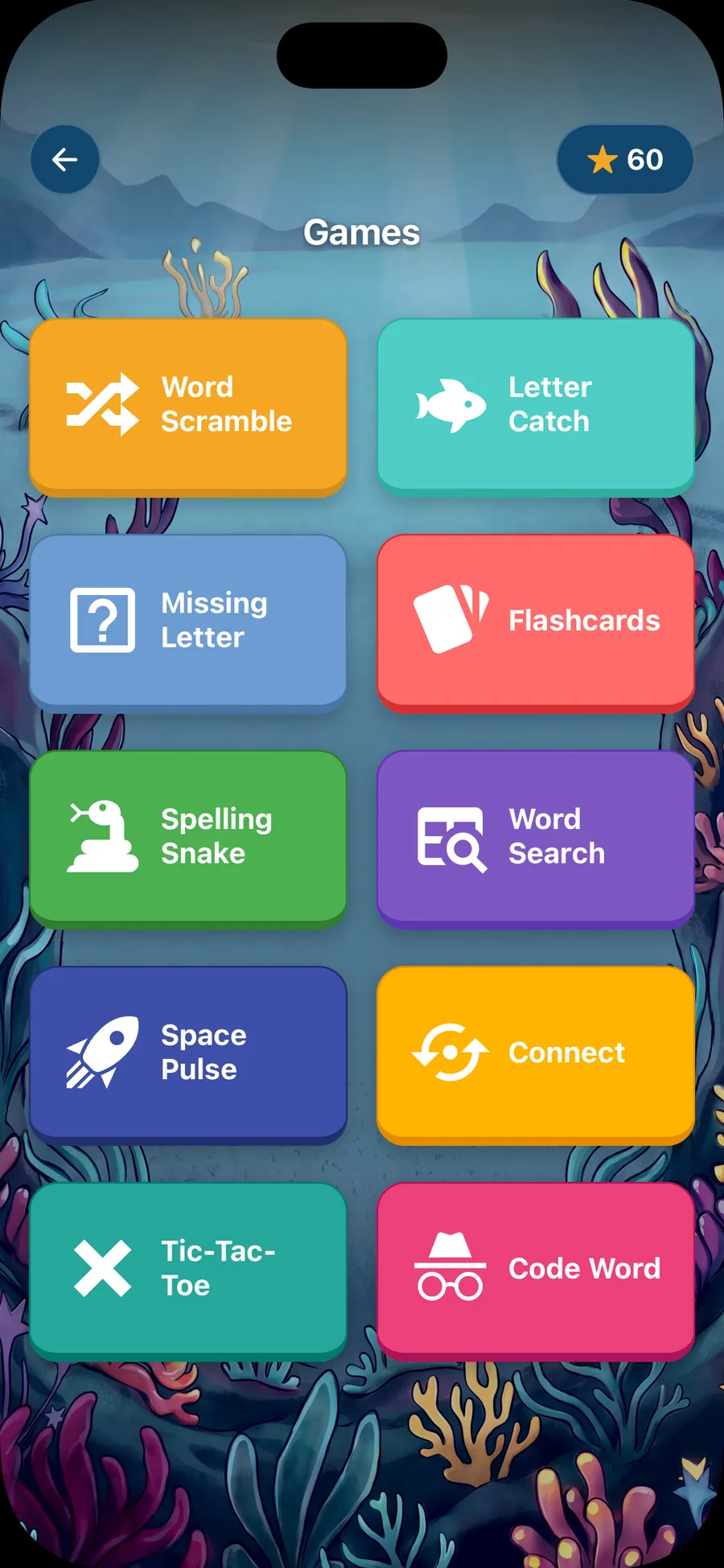
Spelling Stream for Teachers turns a word list into games your class plays in any web browser, with each word read aloud in Australian English. It’s free, with no student logins and no ads. Press Make it a class list under any set above, change words if you like, and share one link.
- Scramble mixes up every letter, so students have to place both letters of a double and put the i of cried where the y was.
- Missing letter takes letters out of each word. When the gap is half of a double, or the i in cried, students have to know the rule to fill it.
- Flashcards asks students to spell the word out loud before they flip the card. Have them say the rule first: “hop, one short vowel, double the p”.
Once the four rules are taught, a mixed list works well for review: two or three words from each set, so students choose the rule for every word. Each list gets its own link, so a group still on just add can have a different list from a group on doubling. How the class link works in Australian classrooms
Where the rules sit in the Australian Curriculum
The Australian Curriculum v9.0 English covers these rules in the sub-strand Phonic and word knowledge:
- AC9E1LY15: “recognise and know how to use grammatical morphemes to create word families”.
- AC9E3LY10: “understand how to apply knowledge of common base words, prefixes, suffixes and generalisations for adding a suffix to a base word to read and comprehend new multimorphemic words”.
- AC9E4LY10: “understand how to use knowledge of letter patterns, including double letters, spelling generalisations, morphological word families, common prefixes and suffixes, and word origins, to spell more complex words”.
- AC9E5LY09: “build and spell new words from knowledge of known words, base words, prefixes and suffixes, word origins, letter patterns and spelling generalisations”.
New South Wales and Victoria publish their own English syllabus and curriculum, so check this order against your school’s scope and sequence.
Sources: Australian Curriculum v9.0 English, F–6 content, Macquarie Dictionary grammar guide, RMIT Learning Lab, spelling tips.
© Australian Curriculum, Assessment and Reporting Authority (ACARA) 2010 to present, unless otherwise indicated. This material was downloaded from the Australian Curriculum website (Website) (accessed 14 November 2026) and was not modified. The material is licensed under CC BY 4.0. Version updates are tracked in the ‘Curriculum version history’ section on the ‘About the Australian Curriculum’ page of the Australian Curriculum website. ACARA does not endorse any product that uses the Australian Curriculum or make any representations as to the quality of such products. Any product that uses material published on this website should not be taken to be affiliated with ACARA or have the sponsorship or approval of ACARA. It is up to each person to make their own assessment of the product, taking into account matters including, but not limited to, the version number and the degree to which the materials align with the content descriptions and achievement standards (where relevant). Where there is a claim of alignment, it is important to check that the materials align with the content descriptions and achievement standards (endorsed by all education Ministers), not the elaborations (examples provided by ACARA).
Questions
What is the doubling rule in spelling?
If a word ends in one vowel letter and then one consonant, and its last syllable is stressed, double the consonant before an ending that starts with a vowel: stop, stopped; begin, beginning. A one-syllable word always counts as stressed. Words ending in w, x or y never double: snowing, fixed, played.
Does travelled have one l or two in Australia?
Two. Australian spelling doubles a final l after one vowel before -ed, -ing and -er, even when the stress falls on the first syllable: travelled, cancelled, labelled, modelling. American spelling keeps one l, so lists made for US classrooms spell these words differently.
Which words keep their e before -ing?
Words whose final e isn’t silent keep it, such as see and agree: seeing, agreeing. Words ending in oe keep it too: canoeing, tiptoeing. Words ending in ie change the ie to y: tie, tying; lie, lying.
Why does the y stay before -ing?
Changing it would put two i’s side by side, as in criing. So the y stays before -ing (crying, studying) and changes to i only before other endings (cried, studied).
Which year teaches these rules?
In the Australian Curriculum v9.0 English, Year 1 adds endings to words that don’t change, Year 3 brings in generalisations for adding a suffix, and Year 4 names double letters and spelling generalisations. ACARA’s Year 4 examples include hope and hoping, and begin and beginning.