The short answer
Most words that end in a shun sound are spelt -tion. To choose, find the base word: after t or te write -tion (act, action), after ss or mit write -ssion (discuss, discussion; permit, permission), after d, de or se write -sion (extend, extension), and after c write -cian for a person (music, musician). An ending that sounds like zhun, as in television, is spelt -sion.
The shun sound at the end of a word has four common spellings: -tion, -sion, -ssion and -cian. The base word usually tells you which one fits. Strictly, the suffix is -ion (or -ian for a person), and the letter before it comes from the end of the base word: act gives action, discuss gives discussion, and music gives musician. The spelling appendix to England’s national curriculum sets out the same rules, and the sets on this page follow them.
The base-word check
Say the long word, take the ending off, and listen for the base word. Then look at how the base word ends.
| The base word ends in | Write | Examples |
|---|---|---|
| t or te | -tion | act, action; complete, completion |
| ss | -ssion | discuss, discussion |
| mit | -ssion | permit, permission |
| d, de or se | -sion | extend, extension; decide, decision; revise, revision |
| c or cs | -cian, for a person | music, musician; mathematics, mathematician |
| no base word you know | -tion is most likely | nation, mention, lotion |
The sound gives a second check. An ending that sounds like zhun, as in television, is spelt -sion. Equation breaks this, and it’s in the exceptions below.
The order to teach it
- -tion first. It is the most common spelling, and the Year 4 lists on this site include it. Begin with base words that end in t or te, where students can see the link: protect, protection.
- -ssion next. The ss or the mit is easy to spot in the base word, and the ending always sounds like shun.
- -sion after that. It has two sounds, shun in extension and zhun in decision, so it needs more listening.
- -cian last, once students know the base words music, magic and mathematics.
This follows the Australian Curriculum: Year 4 covers “spelling generalisations” and “common prefixes and suffixes” (AC9E4LY10), and ACARA’s Year 5 examples show -tion turning the verb protect into the noun protection. Start a chart of rule breakers in the first week and add each exception as it turns up.
-tion: the most common ending
When the base word ends in t, add -ion: invent, invention; predict, prediction. When it ends in te, drop the e first: create, creation; pollute, pollution. The Year 4 list of -tion and -ous words has shorter ones, such as action and station.
Some base words end in other letters and take -ation: inform, information; admire, admiration. The ending still sounds like shun and still starts with t. Other words have no base word in English, such as nation, lotion and mention. With nothing to check, write -tion.
-tion after t and te
Each base word ends in t or te: protect, create, complete, celebrate, hesitate, predict, correct, pollute, attract, inspect.
- protection
- creation
- completion
- celebration
- hesitation
- prediction
- correction
- pollution
- attraction
- inspection
When to write -ssion
A base word that ends in ss keeps both s’s and adds -ion: discuss, discussion; express, expression; possess, possession. A base word that ends in mit swaps the t for ss: permit, permission; admit, admission; omit, omission. A student who knows this can spell transmission and submission from words they already use.
-ssion after ss and mit
The base words are discuss, express, impress, possess, profess, permit, admit, submit, omit and transmit.
- discussion
- expression
- impression
- possession
- profession
- permission
- admission
- submission
- omission
- transmission
When to write -sion
When the base word ends in d, de or se, the end becomes s and -ion follows: extend, extension; expand, expansion; conclude, conclusion; revise, revision. The ending can sound two ways. In extension and tension it sounds like shun. In decision, revision and television it sounds like zhun.
The zhun sound is a clue on its own. A student who hears division or confusion can write -sion without finding the base word. ACARA’s Year 5 examples make a similar link between vision, television and revision.
-sion after d, de and se
The first five end in shun and the last five in zhun. Say each one and sort them by the sound you hear.
- extension
- expansion
- suspension
- tension
- comprehension
- decision
- revision
- conclusion
- erosion
- persuasion
-cian: words for people
Words that end in -cian name a person, usually someone with a job or a skill. Most come from a word that ends in c or cs, and the c stays: magic, magician; optics, optician; paediatrics, paediatrician. The c sounds like k in music and like sh in musician, so saying the base word first is a reminder that the c is there.
Words that end in -tion, -sion and -ssion usually name an action, a thing or an idea instead, such as invention or permission.
-cian for jobs and skills
Each word names a person. All but beautician come from a word that ends in c or cs, such as tactic, clinic and statistics.
- musician
- magician
- optician
- tactician
- clinician
- statistician
- mathematician
- paediatrician
- beautician
The exceptions
- Attend and intend end in d but take -tion: attention, intention. The spelling appendix lists both.
- Dictionary.com gives zhun as the first way to say equation, but it is spelt -tion.
- Fashion, cushion and ocean spell the shun sound with other letters, and suspicion uses -cion.
- Beautician names a person but comes from beauty, which has no c.
Put the ones your class needs on a list of their own, so they get practised together.
Practising with the class link
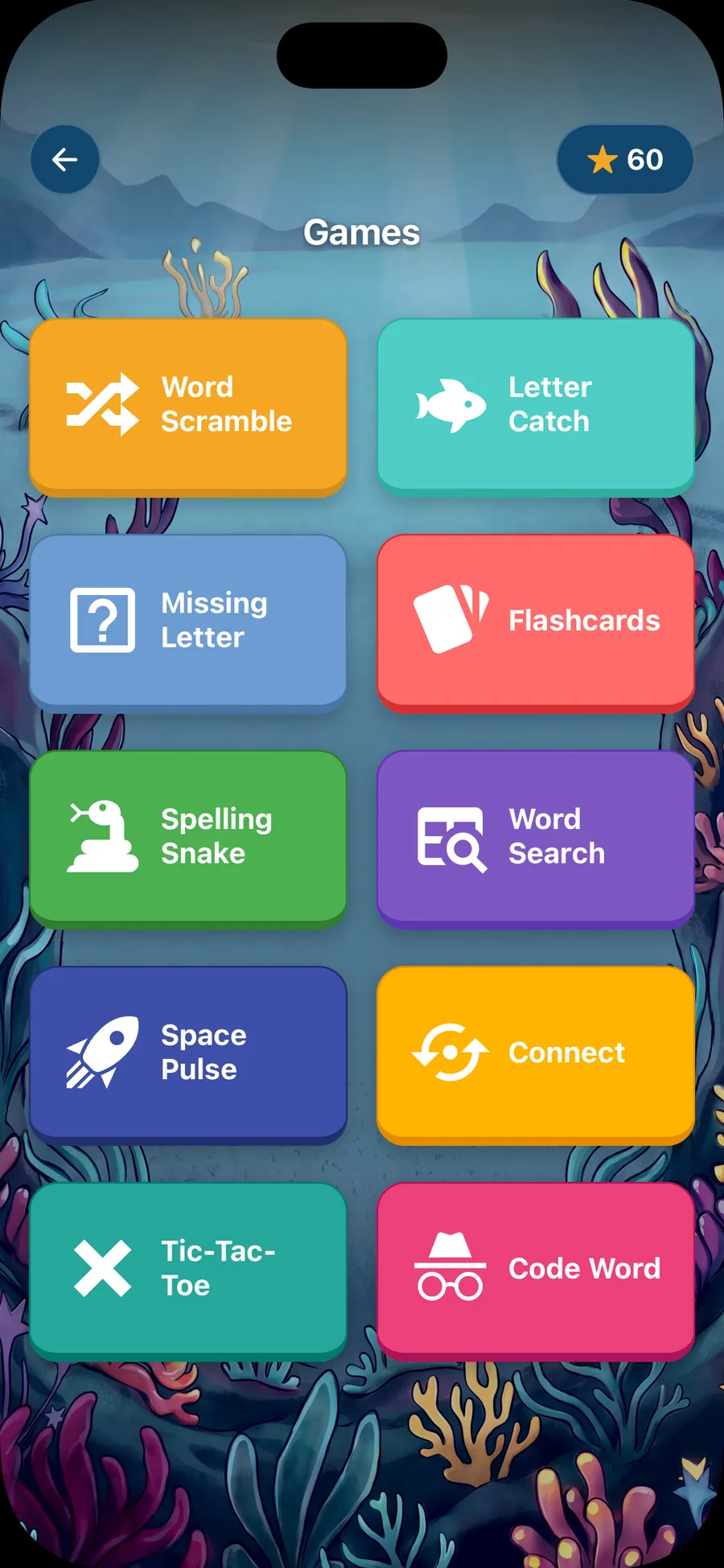
Each set on this page has a Play button that reads the words aloud in Australian English. To give a set to your class, press Make it a class list: the list opens with those words, ready to edit, and you share one link. Students open it in any web browser with no login, and if you edit the words later, the link stays the same.
Put base words and their -ion words on the same list (discuss, discussion, admit, admission) so students hear the pair. A list holds up to 40 words. In Flashcards, students hear each word and spell it out loud before they flip the card, so they have to say whether it’s t, s, ss or c. Missing letter can hide up to 3 letters, which suits long words such as mathematician.
Where this fits in the Australian Curriculum
The sets are original. They are built on these Australian Curriculum v9.0 English content descriptions:
- AC9E4LY10 (Year 4): “understand how to use knowledge of letter patterns, including double letters, spelling generalisations, morphological word families, common prefixes and suffixes, and word origins, to spell more complex words”
- AC9E5LY09 (Year 5): “build and spell new words from knowledge of known words, base words, prefixes and suffixes, word origins, letter patterns and spelling generalisations”
- AC9E5LY10 (Year 5): “explore less common plurals, and understand how a suffix changes the meaning or grammatical form of a word”
- AC9E6LY09 (Year 6): “use knowledge of known words, word origins including some Latin and Greek roots, base words, prefixes, suffixes, letter patterns and spelling generalisations to spell new words including technical words”
New South Wales and Victoria publish their own English syllabus and curriculum, so check the sets against your school’s scope and sequence.
© Australian Curriculum, Assessment and Reporting Authority (ACARA) 2010 to present, unless otherwise indicated. This material was downloaded from the Australian Curriculum website (Website) (accessed 14 November 2026) and was not modified. The material is licensed under CC BY 4.0. Version updates are tracked in the ‘Curriculum version history’ section on the ‘About the Australian Curriculum’ page of the Australian Curriculum website. ACARA does not endorse any product that uses the Australian Curriculum or make any representations as to the quality of such products. Any product that uses material published on this website should not be taken to be affiliated with ACARA or have the sponsorship or approval of ACARA. It is up to each person to make their own assessment of the product, taking into account matters including, but not limited to, the version number and the degree to which the materials align with the content descriptions and achievement standards (where relevant). Where there is a claim of alignment, it is important to check that the materials align with the content descriptions and achievement standards (endorsed by all education Ministers), not the elaborations (examples provided by ACARA).
Questions
What is the rule for -tion and -sion?
Look at the base word. If it ends in t or te, use -tion (invent, invention). If it ends in d, de or se, use -sion (extend, extension; revise, revision). If it ends in ss or mit, use -ssion (express, expression; admit, admission). With no base word to check, write -tion, the most common of the endings.
Why is musician spelt with a c?
Musician comes from music, and the c of music stays in the spelling even though its sound changes from k to sh. Magic and magician work the same way, and so do mathematics and mathematician.
Which -tion and -sion words break the rules?
Attend and intend end in d but take -tion: attention, intention. Equation often ends in a zhun sound but is spelt -tion. Fashion, cushion and ocean spell the shun sound with other letters, so learn them as whole words.
Which year level learns -tion, -sion and -cian?
In the Australian Curriculum v9.0, Year 4 covers spelling generalisations and common suffixes, and Year 5 builds new words from base words, prefixes and suffixes. The Year 4 lists on this site include -tion, and the sets on this page add -ssion, -sion and -cian for Years 5 and 6.
Do students need a login to practise these words?
No. Make a class list and share the link. Students open it in any web browser, with no accounts or passwords.