These Year 1 spelling lists are built on the spelling patterns in the Australian Curriculum v9.0 English for Year 1: the digraphs sh, ch and th, ck at the end of a word, consonant blends at the start and end, long vowels with a final e, two-syllable words, and the endings -s, -ing and -ed.
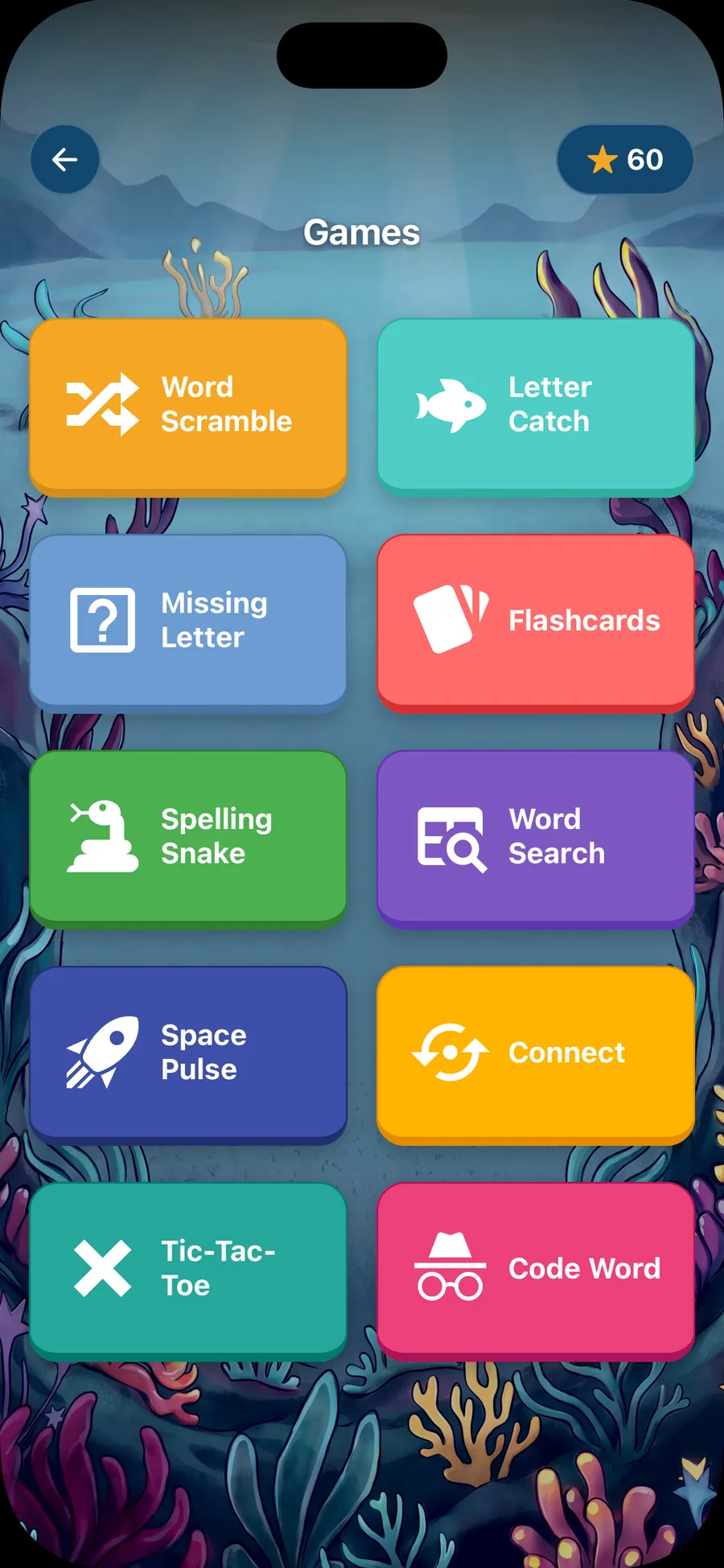
Each list has 10 words, about a week’s worth for children of 6 or 7. Press Play to hear the words in Australian English and try the games, or make it a class list, change any words you like, and share one link.
Digraphs: sh, ch and th
Two letters, one sound. Listen for sh, ch or th at the start or end of each word.
- ship
- shop
- fish
- dish
- chip
- chin
- much
- thin
- moth
- with
ck at the end
After a short vowel, the k sound at the end of a word is usually spelt ck, as in duck.
- duck
- sock
- back
- kick
- neck
- rock
- pack
- lock
- tick
- luck
Blends at the start
Two consonants side by side. Say every sound: f-r-o-g has four.
- frog
- stop
- clap
- drum
- crab
- swim
- plum
- grin
- spot
- slip
Blends at the end
Two consonant sounds come after the vowel. The n in tent and the m in jump are easy to miss.
- milk
- jump
- nest
- hand
- tent
- belt
- lamp
- pond
- gift
- desk
Long vowels with a final e
The e at the end is silent. It makes the vowel before it say its name, as in cake and bike.
- cake
- game
- lake
- bike
- ride
- five
- home
- bone
- cute
- tube
Two-syllable words
Clap each word to hear two beats, then spell one beat at a time: pic-nic, rab-bit.
- picnic
- rabbit
- sunset
- napkin
- insect
- kitten
- muffin
- helmet
- magnet
Adding -s, -ing and -ed
The base word stays the same. Listen to -ed: it sounds like t in jumped and like id in rested.
- jumps
- jumping
- jumped
- helps
- helping
- helped
- looked
- looking
- rested
- resting
Where these patterns come from
Each list is built on a spelling pattern in these Australian Curriculum v9.0 English content descriptions for Year 1. The words are original and aren’t copied from any published spelling program.
- AC9E1LY11: “use short vowels, common long vowels, consonant blends and digraphs to write words, and blend these to read one- and two-syllable words”. Lists: Digraphs: sh, ch and th; Blends at the start; Blends at the end; Long vowels with a final e.
- AC9E1LY13: “spell one- and two-syllable words with common letter patterns”. Lists: ck at the end; Two-syllable words.
- AC9E1LY09: “segment words into separate phonemes (sounds) including consonant blends or clusters at the beginnings and ends of words (phonological awareness)”. Lists: Blends at the start; Blends at the end.
- AC9E1LY12: “understand that a letter can represent more than one sound and that a syllable must contain a vowel sound”. Lists: Two-syllable words.
- AC9E1LY15: “recognise and know how to use grammatical morphemes to create word families”. Lists: Adding -s, -ing and -ed.
New South Wales and Victoria publish their own English syllabus and curriculum. These lists follow the Australian Curriculum, so check them against your school’s scope and sequence.
© Australian Curriculum, Assessment and Reporting Authority (ACARA) 2010 to present, unless otherwise indicated. This material was downloaded from the Australian Curriculum website (Website) (accessed 14 November 2026) and was not modified. The material is licensed under CC BY 4.0. Version updates are tracked in the ‘Curriculum version history’ section on the ‘About the Australian Curriculum’ page of the Australian Curriculum website. ACARA does not endorse any product that uses the Australian Curriculum or make any representations as to the quality of such products. Any product that uses material published on this website should not be taken to be affiliated with ACARA or have the sponsorship or approval of ACARA. It is up to each person to make their own assessment of the product, taking into account matters including, but not limited to, the version number and the degree to which the materials align with the content descriptions and achievement standards (where relevant). Where there is a claim of alignment, it is important to check that the materials align with the content descriptions and achievement standards (endorsed by all education Ministers), not the elaborations (examples provided by ACARA).
Questions
Why are the lists grouped by spelling pattern?
Each list practises one spelling idea for a week. Practising ship, shop and fish together shows that sh is one sound written with two letters, which children can then use on words that aren’t on the list.
Do Year 1 students need a login?
No. Students open the class link in any web browser and play. There are no student accounts, class codes or passwords.
Can I change the words on a list?
Yes. Make it a class list, then add, remove or swap words before you share it. If you edit the list later, the link stays the same.
Other years
- Foundation spelling words
- Year 2 spelling words
- Year 3 spelling words
- Year 4 spelling words
- Year 5 spelling words
- Year 6 spelling words
All spelling lists for Australia, and how the class link works