The short answer
Most nouns add s (frog, frogs), and nouns ending in s, x, z, ch or sh add es, which you can hear as an extra syllable (box, boxes). A consonant and y becomes ies (pony, ponies), but a vowel and y just adds s (key, keys). Many f and fe words change to ves (wolf, wolves), and a small group of words change inside or not at all (tooth, teeth; sheep, sheep).
English makes plurals in a handful of ways, and the end of the singular word tells students which one to use. This guide takes the rules in the order the Australian Curriculum brings them in, from adding s in Foundation to less common plurals in Year 5. Each comes with a check students can run aloud, the exceptions, and a set of words to play.
The rules at a glance
| The word ends in | Do this | Examples |
|---|---|---|
| Most letters | Add s | frog, frogs; desk, desks |
| s, x, z, ch or sh | Add es | bus, buses; torch, torches |
| A consonant and y | Change y to i, add es | pony, ponies; city, cities |
| A vowel and y | Add s | key, keys; holiday, holidays |
| f or fe | Often change to ves; some just add s | wolf, wolves; roof, roofs |
| o | Some add es; many add s | echo, echoes; piano, pianos |
| No pattern | Learn the word | tooth, teeth; sheep, sheep |
1. Add s, or es after s, x, z, ch and sh
The rule. Most nouns add s: frog, frogs. Nouns that end in s, x, z, ch or sh add es: bus, buses; fox, foxes; torch, torches; bush, bushes.
The quick check. Say the plural aloud. If it has an extra syllable at the end, write es: bus-es, lunch-es, sand-wich-es. If it doesn’t, write s. The Macquarie Dictionary’s grammar guide makes the same point: the sound at the end of the word decides between s and es.
Exceptions. When ch sounds like k, there’s no extra syllable, so the word takes s: stomach, stomachs. The sound check still works. A word ending in one z after a short vowel doubles it: quiz, quizzes.
Year 2 and 3: s or es
Say each plural aloud. An extra syllable at the end means es: bus-es, torch-es. Quizzes doubles its z as well.
- frogs
- desks
- buses
- foxes
- glasses
- bushes
- torches
- lunches
- sandwiches
- quizzes
For the youngest students, the Foundation spelling words have a six-word list for adding s. The Year 3 spelling words have a list of -es plurals only.
2. Words that end in y
The rule. When a consonant comes before the y, change the y to i and add es: pony, ponies; lolly, lollies; city, cities. When a vowel comes before the y, just add s: key, keys; trolley, trolleys; holiday, holidays.
The quick check. Cover the y and look at the letter before it. A vowel (a, e, o or u) means s. A consonant means ies. ACARA’s Year 6 examples include lollies and trolleys, a good pair for the board because it shows both halves of the rule.
Linking it to verbs. The same check works for verbs that add s: cry, cries; play, plays. Students who learn it for plurals have it for the y to i rule with -ed and -er as well (cried, happier), which the Year 4 y to i list practises.
Year 3 and 4: ies or just s
Look at the letter before the y. A consonant means ies (cherry, cherries). A vowel means just s (monkey, monkeys).
- cherries
- ponies
- lollies
- parties
- cities
- holidays
- monkeys
- trolleys
- chimneys
- keys
3. Words that end in f, fe or o
f and fe. Many of these change the f or fe to v and add es: wolf, wolves; calf, calves; half, halves; leaf, leaves. The Australian Curriculum glossary uses this pattern as its example of a spelling generalisation, and notes chief and chiefs as an exception. Others just add s: roof, roofs; chef, chefs; reef, reefs; cliff, cliffs; giraffe, giraffes.
The quick check. Say the plural. If you hear a v (wolves), write ves. If you hear an f (roofs, chefs), write s. When students aren’t sure how the plural sounds, the dictionary entry settles it.
o. A group of everyday words add es: potato, potatoes; tomato, tomatoes; echo, echoes; hero, heroes. Many others just add s, including words with a vowel before the o (kangaroo, kangaroos; zoo, zoos; radio, radios), shortened words (photo, photos) and music words (piano, pianos). No sound check helps here, because es and s sound the same after o. Teach the es words as a group to learn by heart.
Year 4 and 5: words ending in f, fe and o
Sort the words into two groups: plurals that change (wolves, echoes) and plurals that just add s (roofs, pianos).
- wolves
- calves
- reefs
- roofs
- chefs
- giraffes
- echoes
- heroes
- pianos
- kangaroos
4. Plurals that change or stay the same
The rule. Some plurals change a vowel inside the word: man, men; tooth, teeth; foot, feet; goose, geese; mouse, mice. A few add en or ren: ox, oxen; child, children. Person usually becomes people. Some words don’t change at all: one sheep, two sheep; one deer, two deer; one trout, two trout. Fish usually works the same way. The Macquarie Dictionary’s grammar guide calls these irregular plurals and gives goose and geese, ox and oxen, and deer and sheep among its examples.
The quick check. There isn’t a letter check for these. Students learn each word whole. Most of these plurals are everyday words students already say, so the job is spelling a word they know. A useful habit is to say “one …, two …” before writing. A compound word takes the plural of its last part, so grandchild becomes grandchildren.
Later. Words from Latin and Greek often keep their own plurals: cactus, cacti; fungus, fungi. These belong in Year 5, and the Year 5 spelling words have a list of less common plurals.
Year 2 to 5: plurals that change or stay the same
Say “one …, two …” with each word: one ox, two oxen; one deer, two deer.
- men
- people
- oxen
- grandchildren
- teeth
- sheep
- deer
- salmon
- trout
- aircraft
The order to teach them
This order follows the examples ACARA gives for each year. Where it gives none, the rule sits in the year it fits best:
- Foundation: add s. ACARA’s example is dogs, which has two meaningful parts, dog and s.
- Years 1 and 2: s or es by sound, and the irregular plurals children already say, such as men, feet and children.
- Year 3: es after ss, sh, ch and z. This is ACARA’s own example of a generalisation for adding a suffix in Year 3.
- Year 4: y to ies, with country and countries as ACARA’s example, and vowel and y words that just add s. Start f and fe to ves here.
- Year 5: less common plurals. ACARA’s examples are cactus and cacti, and louse and lice. Add the o words and the f and fe exceptions.
- Year 6: mixed practice, with lollies and trolleys among ACARA’s examples.
Practising plurals with a class link
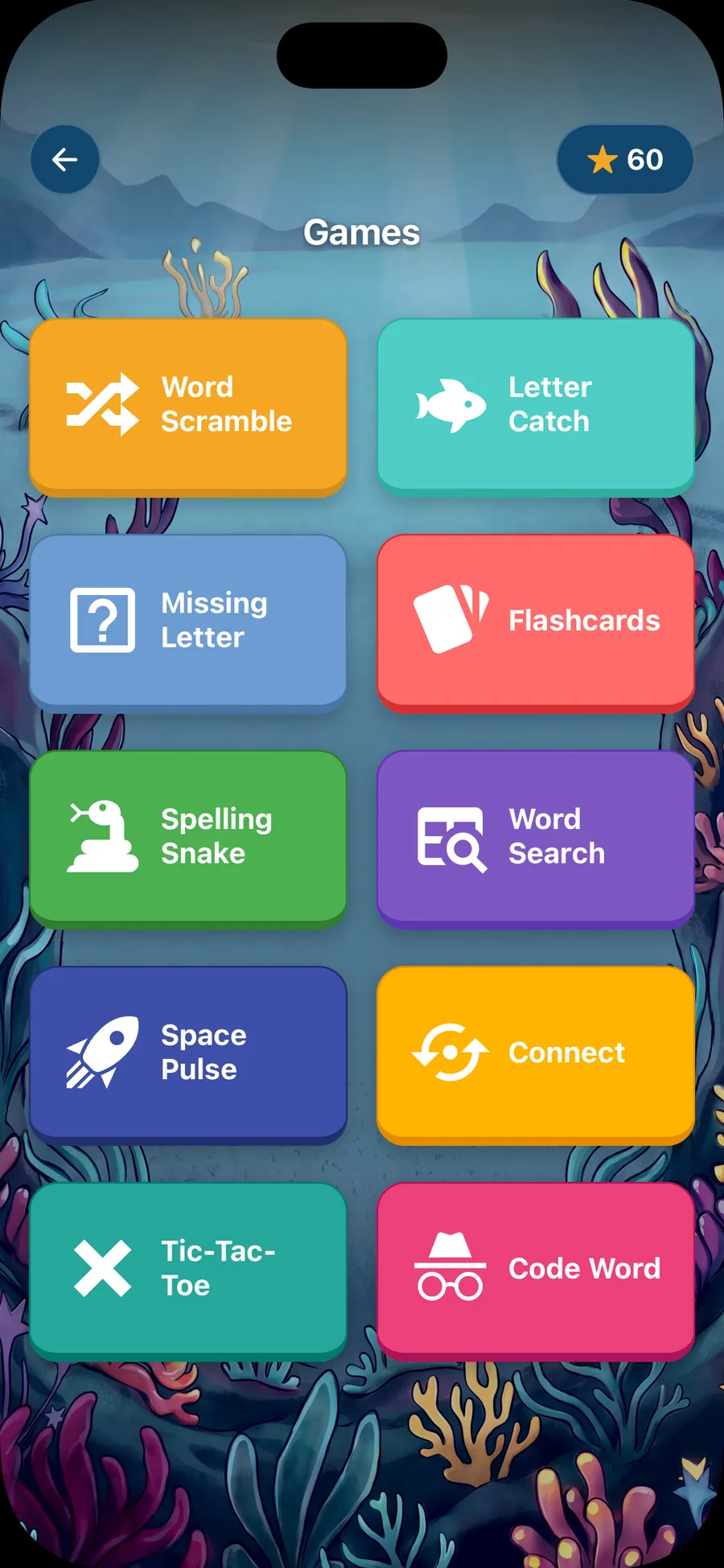
Spelling Stream for Teachers turns a word list into games your class plays in any web browser, with each word read aloud in Australian English. It’s free, with no student logins and no ads. Press Make it a class list under any set above, or type your own words, and share one link.
- In Flashcards, students hear the plural and spell it out loud before they flip the card. Ask them to say the singular first: “torch, torches, t-o-r-c-h-e-s”.
- Scramble can add extra letters that don’t belong, so students have to decide which letters the plural needs.
- Missing letter can hide up to three letters in a word. When a gap falls in the ending, students have to know which plural rule the word follows.
After the rules are taught, a mixed list with two or three words from each set makes students choose the rule every time. Each list has its own link and QR code, and you can keep up to 25 lists, so each spelling group can have its own. How the class link works in Australian classrooms
Where plurals sit in the Australian Curriculum
The Australian Curriculum v9.0 English covers plurals in the sub-strand Phonic and word knowledge:
- AC9EFLY15: “understand that words are units of meaning and can be made of more than one meaningful part”.
- AC9E3LY10: “understand how to apply knowledge of common base words, prefixes, suffixes and generalisations for adding a suffix to a base word to read and comprehend new multimorphemic words”.
- AC9E4LY10: “understand how to use knowledge of letter patterns, including double letters, spelling generalisations, morphological word families, common prefixes and suffixes, and word origins, to spell more complex words”.
- AC9E5LY10: “explore less common plurals, and understand how a suffix changes the meaning or grammatical form of a word”.
New South Wales and Victoria publish their own English syllabus and curriculum, so check this order against your school’s scope and sequence.
Sources: Australian Curriculum v9.0 English, F–6 content, Australian Curriculum v9.0 English glossary, Macquarie Dictionary grammar guide, RMIT Learning Lab, spelling tips.
© Australian Curriculum, Assessment and Reporting Authority (ACARA) 2010 to present, unless otherwise indicated. This material was downloaded from the Australian Curriculum website (Website) (accessed 14 November 2026) and was not modified. The material is licensed under CC BY 4.0. Version updates are tracked in the ‘Curriculum version history’ section on the ‘About the Australian Curriculum’ page of the Australian Curriculum website. ACARA does not endorse any product that uses the Australian Curriculum or make any representations as to the quality of such products. Any product that uses material published on this website should not be taken to be affiliated with ACARA or have the sponsorship or approval of ACARA. It is up to each person to make their own assessment of the product, taking into account matters including, but not limited to, the version number and the degree to which the materials align with the content descriptions and achievement standards (where relevant). Where there is a claim of alignment, it is important to check that the materials align with the content descriptions and achievement standards (endorsed by all education Ministers), not the elaborations (examples provided by ACARA).
Questions
When do you add es instead of s?
When the word ends in s, x, z, ch or sh. Say the plural aloud: if it has an extra syllable (box-es, lunch-es), write es. When ch sounds like k, as in stomach, there’s no extra syllable, so it takes s: stomachs.
Is there a plurals worksheet for Year 3?
This page has word lists rather than worksheets. Play a set, or make it a class list and share one link. Every class list also has a one-page flyer with the words, a QR code and the link, ready to print. For a paper task, have students sort the week’s words into s, es and ies columns.
Why is it roofs and not rooves?
Changing f to ves is a pattern, not a rule every word follows. Roof, chef, chief, cliff, reef and belief all just add s. When students aren’t sure, the dictionary entry shows the plural.
Is it potatoes or potatos?
Potatoes. Tomatoes, echoes and heroes add es too. Many other words ending in o just add s, including pianos, photos, kangaroos and zoos, so the es words are worth learning as a group.
Which plurals are taught in which year?
In the Australian Curriculum v9.0 English, Foundation meets plural s (dog, dogs), Year 3 adds es after ss, sh, ch and z, Year 4 changes y to i (country, countries), and Year 5 explores less common plurals such as cactus and cacti.