These Year 5 spelling lists are built on the spelling patterns in the Australian Curriculum v9.0 English for Year 5: letter patterns with more than one sound, the suffixes -ment, -ness and -ion, -able and -ible, less common plurals, the prefixes sub- and pre-, and Greek roots such as tele, graph and micro.
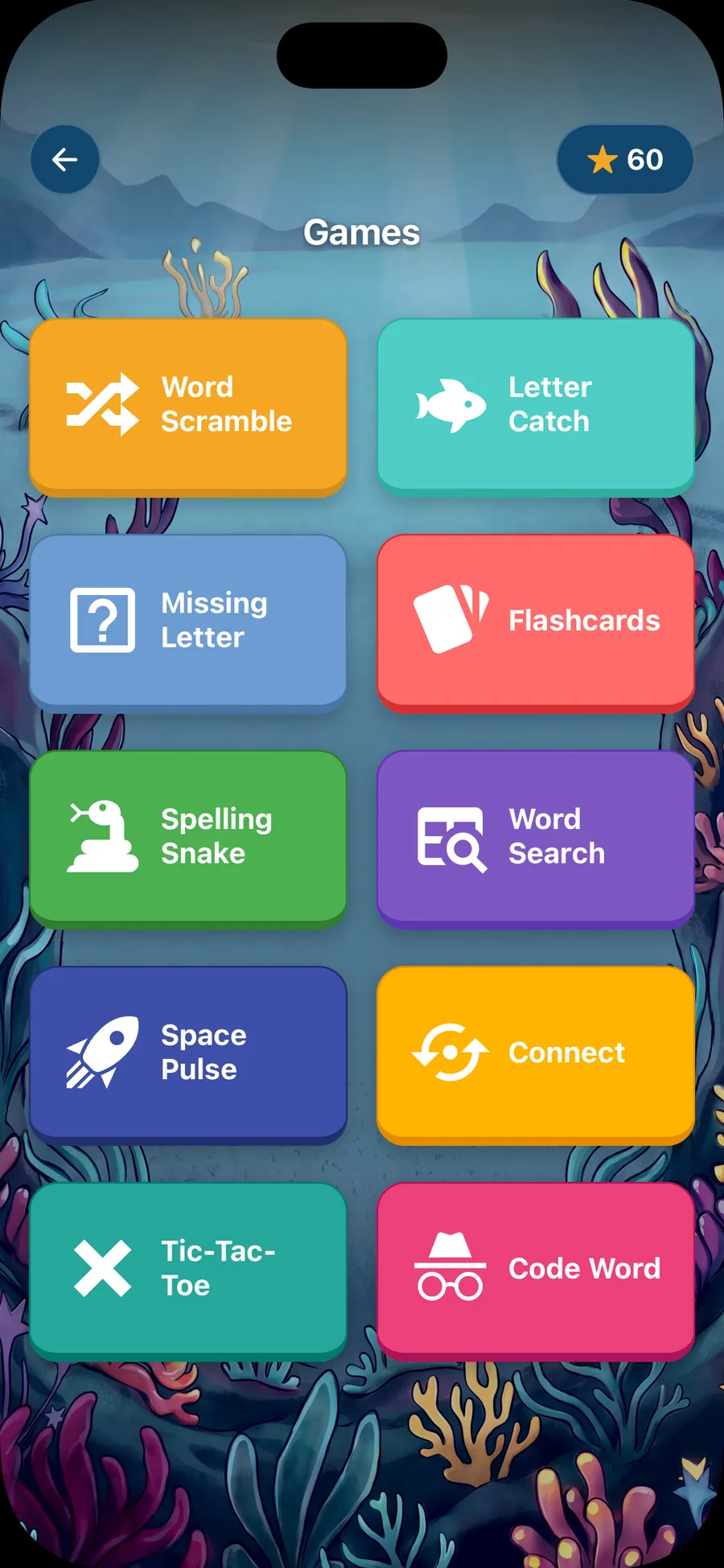
Each list has 10 words, for students who are mostly 10 or 11. Play a list in Australian English, or make it a class list and change the words to suit your class before you share the link.
Same letters, different sounds: ea and ough
The letters ea and ough each spell more than one sound. Sort the words into groups by the sound you hear.
- bread
- weather
- great
- steak
- heard
- tough
- cough
- through
- plough
- rough
Suffixes: -ment, -ness and -ion
Each suffix makes a noun. Most base words stay whole (enjoy, enjoyment), but a final e drops before -ion (decorate, decoration).
- enjoyment
- agreement
- equipment
- payment
- kindness
- fairness
- fitness
- decoration
- collection
- direction
-able and -ible
The ending -able usually follows a whole word you can still see: wash, washable. The ending -ible usually follows a part that isn’t a word on its own: vis, visible.
- washable
- comfortable
- readable
- breakable
- valuable
- visible
- sensible
- possible
- edible
- responsible
Less common plurals
Some plurals change the vowel (mouse, mice), f to v (shelf, shelves) or the ending (cactus, cacti), and some add -es after o (potatoes).
- cacti
- fungi
- mice
- geese
- children
- women
- shelves
- loaves
- potatoes
- tomatoes
Prefixes: sub- and pre-
The prefix sub- means under or below, and pre- means before. Add the prefix to the front and keep the rest of the word the same.
- subtract
- subtitle
- subheading
- submerge
- subway
- preview
- preheat
- preschool
- prefix
- predict
Greek roots: tele, graph and micro
In Greek, tele means far, graph means writing or drawing, and micro means small. A student who can spell tele in telescope already has the start of television.
- telescope
- television
- telephone
- paragraph
- photograph
- autograph
- graphic
- microphone
- microscope
- microwave
NAPLAN in Year 5
Year 5 sits NAPLAN in March, between 10 and 22 March in 2027. Its conventions of language test includes spelling questions with audio dictation: students hear the word and type it.
The lists follow the Year 5 spelling patterns and aren’t a NAPLAN word list. ACARA says students aren’t expected to study for the tests.
Sources: NAPLAN key dates, what’s in the NAPLAN tests, NAPLAN Online, NAPLAN FAQs.
Where these patterns come from
Each list is built on a spelling pattern in these Australian Curriculum v9.0 English content descriptions for Year 5. The words are original and aren’t copied from any published spelling program.
- AC9E5LY08: “use phonic, morphemic and vocabulary knowledge to read and spell words that share common letter patterns but have different pronunciations”. Lists: Same letters, different sounds: ea and ough.
- AC9E5LY10: “explore less common plurals, and understand how a suffix changes the meaning or grammatical form of a word”. Lists: Suffixes: -ment, -ness and -ion; Less common plurals.
- AC9E5LY09: “build and spell new words from knowledge of known words, base words, prefixes and suffixes, word origins, letter patterns and spelling generalisations”. Lists: -able and -ible; Prefixes: sub- and pre-; Greek roots: tele, graph and micro.
- AC9E5LA08: “understand how vocabulary is used to express greater precision of meaning, including through the use of specialist and technical terms, and explore the history of words”. Lists: Greek roots: tele, graph and micro.
New South Wales and Victoria publish their own English syllabus and curriculum. These lists follow the Australian Curriculum, so check them against your school’s scope and sequence.
© Australian Curriculum, Assessment and Reporting Authority (ACARA) 2010 to present, unless otherwise indicated. This material was downloaded from the Australian Curriculum website (Website) (accessed 14 November 2026) and was not modified. The material is licensed under CC BY 4.0. Version updates are tracked in the ‘Curriculum version history’ section on the ‘About the Australian Curriculum’ page of the Australian Curriculum website. ACARA does not endorse any product that uses the Australian Curriculum or make any representations as to the quality of such products. Any product that uses material published on this website should not be taken to be affiliated with ACARA or have the sponsorship or approval of ACARA. It is up to each person to make their own assessment of the product, taking into account matters including, but not limited to, the version number and the degree to which the materials align with the content descriptions and achievement standards (where relevant). Where there is a claim of alignment, it is important to check that the materials align with the content descriptions and achievement standards (endorsed by all education Ministers), not the elaborations (examples provided by ACARA).
Questions
Do these lists cover NAPLAN?
No. They follow the Year 5 spelling patterns in the Australian Curriculum and aren’t a NAPLAN word list. ACARA says students aren’t expected to study for NAPLAN.
What if a list is too easy for some students?
Make it a class list and add harder words with the same pattern, such as more -ible words or longer Greek roots. A list holds up to 40 words, and each list gets its own link, so a second group can have a harder list.
Can students practise at home?
Yes. The class link works in any web browser at home, with nothing to install. Families who want more can open the list in the free Spelling Stream app.
Other years
- Year 4 spelling words
- Year 6 spelling words
- Year 3 spelling words
- Year 2 spelling words
- Year 1 spelling words
- Foundation spelling words
All spelling lists for Australia, and how the class link works