These Year 6 spelling lists are built on the spelling patterns in the Australian Curriculum v9.0 English for Year 6: Latin and Greek roots, ie and ei, the endings -ance and -ence, less common silent letters, and technical words from maths and science.
Each list has 10 words, for students who are mostly 11 or 12 and in their last year of primary school. Play a list to hear the words in Australian English, or make it a class list and share one link with your class.
Latin roots: port, aqua and struct
In Latin, port means carry, aqua means water and struct means build. Find the root, then spell the parts around it.
- transport
- portable
- export
- import
- report
- aquarium
- aquatic
- structure
- construct
- instruction
Greek roots: geo, therm and bio
In Greek, geo means earth, therm means heat and bio means life. The word geothermal uses two of them.
- geography
- geology
- geometry
- geothermal
- thermometer
- thermal
- thermostat
- biology
- biography
- biodiversity
ie and ei
After c, the ee sound is spelt ei, as in ceiling; elsewhere it’s usually ie, as in field. The letters ei can also say a, as in neighbour, and either and protein break the pattern.
- believe
- achieve
- field
- piece
- ceiling
- receive
- neighbour
- weight
- either
- protein
-ance, -ence, -ant and -ent
Words that end in -ant usually make nouns with -ance (distant, distance), and -ent words usually take -ence (patient, patience).
- distance
- balance
- appearance
- patience
- confidence
- difference
- important
- assistant
- excellent
- independent
Less common silent letters
Each word has a letter you write but don’t say. Say it the way it’s spelt to remember it: is-land, cas-tle.
- rhythm
- rhyme
- island
- design
- castle
- listen
- whistle
- muscle
- scissors
- doubt
Technical words from maths and science
Many are built from Greek or Latin parts: peri in perimeter means around, and hemi in hemisphere means half.
- perimeter
- diameter
- parallel
- symmetry
- evaporation
- condensation
- habitat
- marsupial
- hemisphere
- electricity
Where these patterns come from
Each list is built on a spelling pattern in these Australian Curriculum v9.0 English content descriptions for Year 6. The words are original and aren’t copied from any published spelling program.
- AC9E6LY09: “use knowledge of known words, word origins including some Latin and Greek roots, base words, prefixes, suffixes, letter patterns and spelling generalisations to spell new words including technical words”. Lists: Latin roots: port, aqua and struct; Greek roots: geo, therm and bio; ie and ei; -ance, -ence, -ant and -ent; Technical words from maths and science.
- AC9E6LY08: “use phonic knowledge of common and less common grapheme–phoneme relationships to read and write increasingly complex words”. Lists: ie and ei; Less common silent letters.
New South Wales and Victoria publish their own English syllabus and curriculum. These lists follow the Australian Curriculum, so check them against your school’s scope and sequence.
© Australian Curriculum, Assessment and Reporting Authority (ACARA) 2010 to present, unless otherwise indicated. This material was downloaded from the Australian Curriculum website (Website) (accessed 14 November 2026) and was not modified. The material is licensed under CC BY 4.0. Version updates are tracked in the ‘Curriculum version history’ section on the ‘About the Australian Curriculum’ page of the Australian Curriculum website. ACARA does not endorse any product that uses the Australian Curriculum or make any representations as to the quality of such products. Any product that uses material published on this website should not be taken to be affiliated with ACARA or have the sponsorship or approval of ACARA. It is up to each person to make their own assessment of the product, taking into account matters including, but not limited to, the version number and the degree to which the materials align with the content descriptions and achievement standards (where relevant). Where there is a claim of alignment, it is important to check that the materials align with the content descriptions and achievement standards (endorsed by all education Ministers), not the elaborations (examples provided by ACARA).
Questions
Are there lists for Year 7?
No. These lists cover primary school, Foundation to Year 6. A Year 7 teacher can type any words into a class list, up to 40 a list.
Which games suit Year 6?
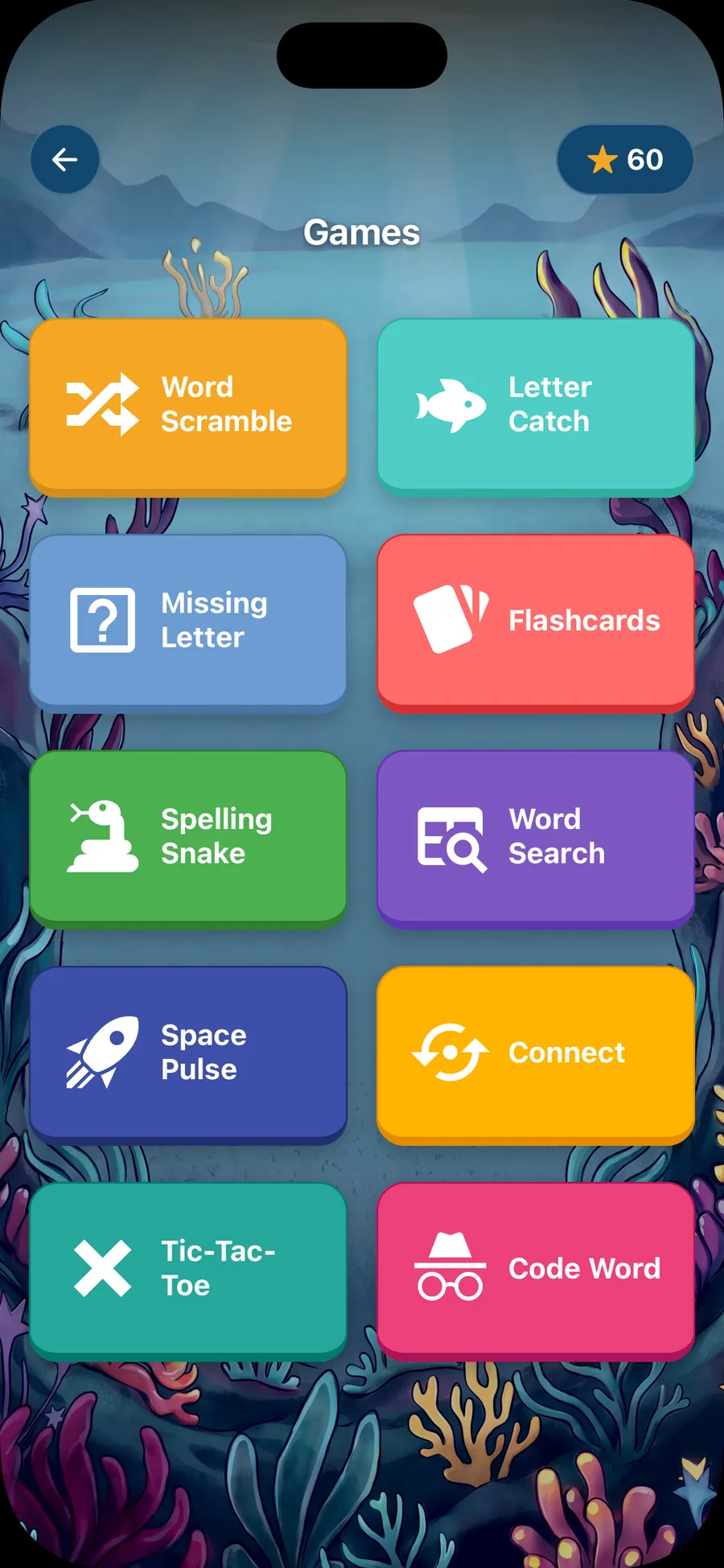
Scramble gets harder as words get longer, so roots and technical words work well there. You can also add extra letters to Scramble, and set Missing letter to hide up to 3 letters that students type on the keyboard.
Can I print the words?
Yes. Every class list has a one-page flyer with the words, a QR code and the link, ready to print and send home.
Other years
- Year 5 spelling words
- Year 4 spelling words
- Year 3 spelling words
- Year 2 spelling words
- Year 1 spelling words
- Foundation spelling words
All spelling lists for Australia, and how the class link works