These lists are for new entrants, Year 0 and Year 1, when most children are 5 or 6. They are built on the spelling patterns the New Zealand Curriculum English sets out for the first year at school: short words with one letter for each sound, the digraphs sh, ch, th and ng, two consonants side by side, and a few tricky words such as said and was.
Each set has six words, enough for one short practice. Play a set to hear it read aloud in Australian English, or make it a class list and share one link with your class. Lists are read in Australian or US English, as there is no New Zealand English voice.
Short a and i
One letter for each sound. Say each sound, then blend them into the word.
- tap
- fin
- kit
- nap
- van
- zip
Short e, o and u
The same three-sound words, with the other short vowels.
- hen
- net
- hop
- log
- mud
- rug
sh and ch
Two letters, one sound. Both can start or end a word.
- shop
- shed
- fish
- chin
- chop
- much
th and ng
th can start or end a word. ng comes at the end, never at the start.
- then
- with
- moth
- ring
- wing
- long
Two consonants at the start
Both consonants keep their own sound: f, l, a, g.
- flag
- crab
- spin
- drum
- plum
- grin
Two consonants at the end
Listen for both sounds at the end: the l and t in belt, the n and d in hand.
- belt
- hand
- lamp
- tent
- desk
- gift
First tricky words
Common words with a part that isn’t spelt the way it sounds, such as the ai in said.
- was
- said
- they
- have
- come
- what
New entrants and Year 0
Children in New Zealand can start school once they turn five and must start by six, so a new entrant class grows through the year. Schools that use cohort entry take new entrants in groups on set dates instead, at the start and middle of each term. A child who starts in the second half of the year is often counted as Year 0 and moves into Year 1 the next year, though schools apply this differently.
Because children arrive at different times, one class list won’t suit everyone. Make one list for children in their first weeks and another for those further on, and give each group its own link.
Phonics checks
Schools in New Zealand check children’s phonics twice in their first year at school: around 20 weeks after they start, and again at 40 weeks. These sets are not a practice version of those checks. They are short lists of words to sound out and spell, a few minutes at a time.
Starting the games with five-year-olds
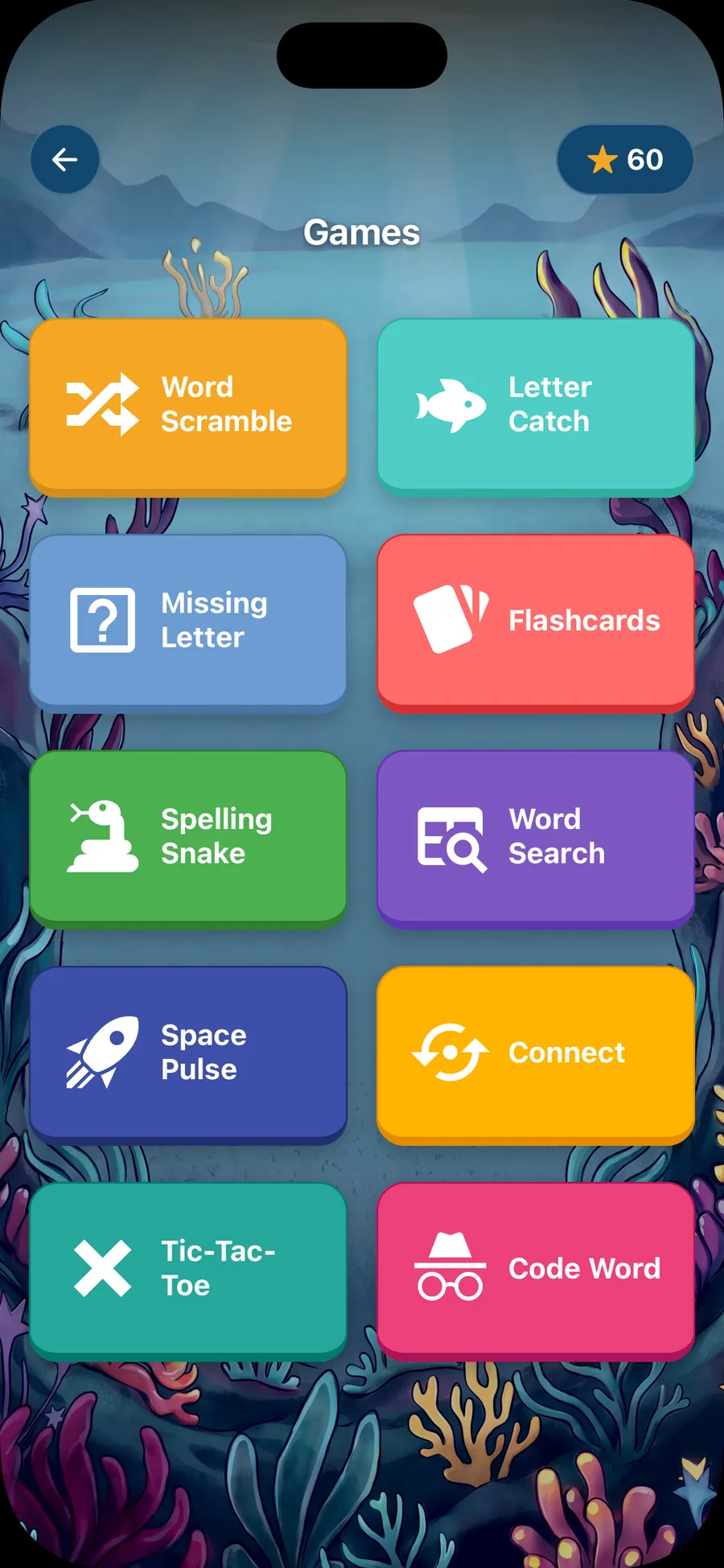
Play the words together before children use a game on their own. Missing letter is a good first game, because only one letter is gone. Flashcards suits a teacher or buddy sitting with a child: hear the word, say the letters, then flip the card to check.
Where these patterns come from
The New Zealand Curriculum English describes phonics and spelling by year at school. For the first year it covers words with one letter for each sound, common consonant digraphs, and words with two consonants together at the start or the end. The words in these sets are our own choice. They are not a Ministry of Education list, and the Ministry did not make or endorse them.
Questions
Is this the right list for new entrants?
Yes. The Year 1 page covers new entrants, Year 0 and Year 1, since most of these children are in their first year at school. Start with the short vowel sets, and move on when children can sound out three-letter words.
Why are there only six words in each set?
Six words make a short practice that a new entrant can finish in one go. A class list holds up to 40 words, so you can add more when your class is ready.
Can children use the games before they can read?
Yes. Every word is read aloud, and the Hear it button plays it again. Play each set with the class first, so children know the words and how the game works.
Which voice reads the words?
Australian English. There is no New Zealand English voice, so each list is read in Australian or US English. Lists made by teachers in New Zealand start in Australian English, and you can change the voice for any list.
Other years
- Year 2 spelling list
- Year 3 spelling list
- Year 4 spelling list
- Year 5 spelling list
- Year 6 spelling list
All spelling lists for New Zealand, and how the class link works